
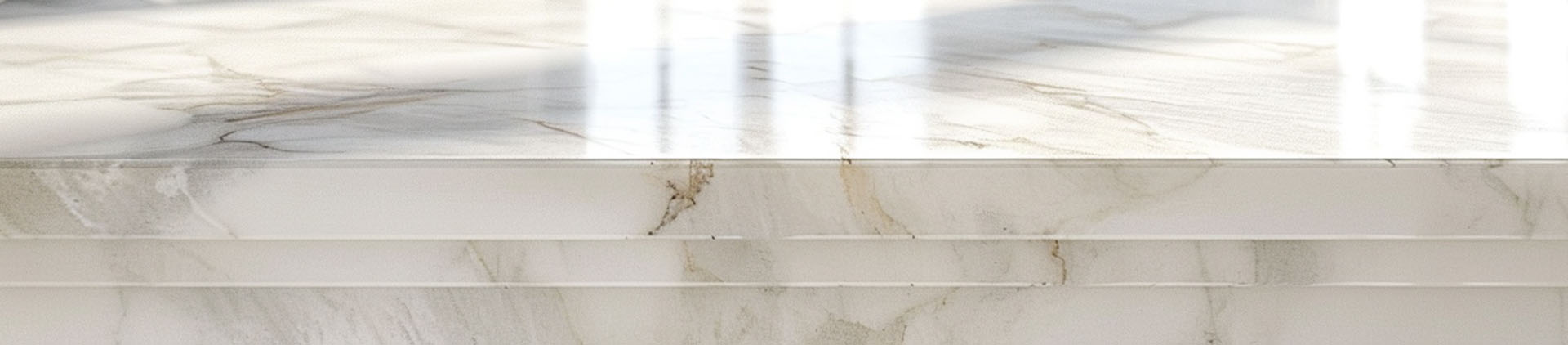
7 Tips for Choosing Taj Mahal Quartz Stone?
7 Tips for Choosing Taj Mahal Quartz Stone?
0%
Table of Contents
Picking Taj Mahal Quartz Stone isn’t just about finding a warm color that matches your kitchen cabinets. The name gets thrown around a lot for commercial purposes, but quite often, what you’re actually getting is natural quartzite instead of engineered quartz. And that little difference really matters—it can impact how you seal it, what kind of maintenance it needs, how it’s fabricated, and how it’ll hold up over time.
So, take a closer look.
Jim Hieb, a technical expert at the Natural Stone Institute, once said, “Stone should be evaluated based on how you plan to use it, not just how it looks.” That advice hits home for Taj Mahal Quartz Stone. A slab might look perfectly calm and creamy under showroom lighting, but then you notice some stronger veining near a window. And those tiny samples? They can hide a lot—like mineral streaks, surface pitting, or slight shade differences when you see the whole slab in natural light.
This guide’s got seven handy tips to help you pick smarter and safer. You’ll learn how to verify the type of stone, check entire slabs carefully, compare different finishes, and see how resistant it is to stains, heat, and scratches. It also explains why the paperwork from your supplier matters—because similar materials might have different names, and it’s good to know exactly what you’re getting.
Make sure to check the slab against your cabinets, flooring, and natural sunlight. Don’t forget to ask your fabricator about whether they’ve used resin treatments, how stable the edges are, and which sealers they recommend. And definitely confirm the cleaning routine beforehand—no point in choosing a gorgeous surface if keeping it clean feels like a big hassle.
Now, no checklist is foolproof. Even folks who know their stuff can sometimes get caught up in the drama of really dramatic veining or those stunning polished displays in the showroom. So, the key is balancing what looks good, what the evidence shows, your budget, and realistic expectations. With a little careful checking and some guidance from pros, Taj Mahal Quartz Stone can turn into a stylish, lasting feature in your home—rather than an expensive surprise down the line.

Table of Contents [Hide]
1 Understanding Taj Mahal Quartzite’s Appearance and Composition
2 Checking Slab Quality, Thickness, and Structural Integrity
3 Comparing Colors, Veining, and Surface Finish Options
4 Evaluating Durability for Countertops and High-Traffic Areas
5 Matching the Stone with Your Interior Design and Lighting
6 Reviewing Maintenance Needs, Sealing, and Cleaning Requirements
7 Confirming Pricing, Sourcing, Fabrication, and Installation Standards
Understanding Taj Mahal Quartzite’s Appearance and Composition
Taj Mahal quartzite is valued for its warm ivory background, soft beige movement, and occasional gray or gold veining. Its appearance can change under daylight, warm bulbs, and nearby cabinet colors. View a full slab when possible. Small samples rarely show the complete pattern. Inspect the veining direction, color consistency, surface finish, and visible fissures before choosing.
Composition matters more than appearance alone. Natural quartzite forms when quartz-rich sandstone changes under heat and pressure. This process creates a dense stone with strong mineral structure, but each slab remains geologically unique. Confirm that the material is natural quartzite, not engineered quartz with a similar name. Ask for test information, quarry details, and care instructions. A qualified fabricator can also identify resin-filled areas or repaired fissures.
Check practical details. Run a soft cloth across the surface and look for uneven texture. Water testing may reveal absorption, although professional testing is more reliable. Quartzite still benefits from proper sealing, especially around sinks and food preparation areas. Choose a polished finish for sharper color contrast, or a honed finish for a quieter look. Review the slab layout before cutting. Veins may not align as expected. That can be disappointing. It is also why an experienced installer should discuss seams, edges, overhangs, and support requirements before fabrication.
Checking Slab Quality, Thickness, and Structural Integrity
Choosing Taj Mahal quartz stone requires more than matching a warm ivory color. Inspect each slab under bright, even lighting. Look for open fissures, resin-filled cracks, cloudy patches, and uneven veining. A polished surface should reflect light consistently. Small natural variations are acceptable. Structural damage is not.
Measure the slab thickness with calipers, not by visual judgment. Common options may vary, but the actual measurement must suit the countertop design and edge profile. Check the back for mesh reinforcement, loose areas, and signs of poor bonding. Run a straightedge across the surface to detect warping. Also request test data or technical documentation covering water absorption, flexural strength, and mineral classification. “Quartz” is sometimes used loosely in product descriptions, so verify the stone before ordering.
A fabricator should inspect corners and cutout zones carefully because sinks and cooktops create stress points. Tap the slab lightly and listen for dull, separated areas, though this test cannot replace professional inspection. Dry-fit the pieces when possible, then confirm that veins align without forcing the joints. One detail I have learned from site work: a beautiful sample can hide a difficult full slab. Take photographs, record thickness measurements, and leave room for honest rejection when quality feels uncertain. My own first inspections were too focused on color; structural checks deserved equal attention.
| Tip | Quality Dimension | What to Check | Practical Inspection Method | Potential Red Flags |
|---|---|---|---|---|
| 1 | Slab Thickness | Common options: 15–20 mm Confirm the actual thickness matches the specification and intended application. | Measure several points along the edges with a calibrated digital caliper. For large islands, overhangs, and high-use surfaces, request the fabricator’s structural recommendation. | Noticeable thickness variation, damaged edges, or a slab that is thinner than the documented specification. |
| 2 | Flatness and Warping | The slab should lie consistently flat, within the supplier’s stated manufacturing tolerance. | Place a straightedge across the slab in multiple directions and check for visible gaps. Inspect both the polished face and the underside. | Persistent rocking, bowing, twisting, or large gaps under the straightedge may create installation stress and uneven seams. |
| 3 | Cracks and Edge Integrity | The slab should be free from through-cracks and unstable edge damage. | Examine corners, sink cutout areas, forklift holes, and the perimeter under bright angled light. Run a fingertip carefully along the edge to detect chips or sharp fractures. | Hairline cracks extending from a corner, repaired fractures in critical areas, deep chips, or cracks visible on both surfaces. |
| 4 | Surface Finish and Pinholes | The polished surface should have consistent gloss, color, and texture across the viewing area. | View the slab under natural and bright artificial light from different angles. Wipe the surface clean and inspect for pits, resin marks, dull patches, and polishing swirls. | Concentrated pinholes, uneven sheen, visible filler, cloudy patches, or surface defects that remain after cleaning. |
| 5 | Veining and Color Consistency | Natural-looking variation is expected, but the selected slabs should provide a coordinated pattern for the project. | Inspect full slabs rather than relying only on small samples. Compare slabs side by side and plan vein direction before cutting. | Unapproved color differences, abrupt pattern changes at intended seams, or veining that conflicts with the layout plan. |
| 6 | Water Absorption and Staining Performance | Engineered quartz is generally non-porous, but the finished surface should still comply with the applicable product specification. | Review the technical data sheet for water absorption and stain-resistance information. If an approved sample test is allowed, apply a small amount of water or a common staining agent to a concealed area and clean it according to the instructions. | Darkening that remains after cleaning, discoloration around defects, or missing performance documentation. |
| 7 | Structural Support and Fabrication Suitability | Support, seams, cutouts, and overhangs must be designed for the slab thickness and installation conditions. | Confirm cabinet levelness, continuous support requirements, seam locations, sink and cooktop cutout details, and any permitted overhang limits with a qualified fabricator before cutting. | Unsupported long spans, excessive overhangs, sharp internal cutout corners, seams near weak points, or installation on uneven cabinetry. |
Comparing Colors, Veining, and Surface Finish Options
7 Tips for Choosing Taj Mahal Quartz Stone?
Taj Mahal quartz stone usually blends a warm ivory base with soft beige or gray veining. Start with the room’s fixed colors, including cabinets, flooring, and wall paint. Warm ivory suits wood and brass details, while cooler veins work better with gray cabinetry. View a full-size slab, not only a small sample. Small samples hide dramatic movement.
Lighting changes everything. Check the slab in daylight, evening light, and under task lighting. Then compare vein direction with your island layout. Long, flowing veins can create a calm effect, but a busy pattern may overwhelm a narrow kitchen. Ask the fabricator to mark the most visible areas. I once trusted a small sample and regretted the stronger veining across the island.
Surface finish affects both appearance and daily care. Polished surfaces reflect light and make colors appear brighter. Honed finishes feel softer and conceal minor scratches, yet they may show fingerprints or oil more easily. Leathered finishes add texture and visual depth. Touch a real sample first. It matters.
Review the technical sheet for stain resistance, heat guidance, edge options, and cleaning requirements. Confirm how seams will align with the veining. Inspect the slab before cutting, because natural-looking patterns can vary between batches. A professional fabricator should explain these limitations clearly, not promise perfect matching. Leave room for doubt. Your preference may change after seeing the actual stone beside your cabinets.
Evaluating Durability for Countertops and High-Traffic Areas
7 Tips for Choosing Taj Mahal Quartz Stone
Durability should lead every Taj Mahal quartz stone decision, especially around islands, kitchen sinks, and busy entrances. Confirm the material first. Many slabs sold as “Taj Mahal quartz” are actually natural quartzite, not engineered quartz. Their performance can differ substantially. Request the quarry name, petrographic description, and batch-specific test results. The Natural Stone Institute recommends evaluating absorption, strength, and abrasion resistance before specifying natural stone. ASTM C97 testing measures absorption and density; ASTM C880 measures flexural strength. Ask for both.
Quartzite typically contains abundant quartz, measuring about 7 on the Mohs hardness scale, according to the U.S. Geological Survey’s Mineral Commodity Summaries. That hardness helps resist scratching from cookware and grit. It does not make the surface stain-proof. A polished slab may still show oil marks if its pores remain open. For high-traffic areas, prioritize low water absorption, consistent thickness, and strong edge details. ASTM C241 abrasion testing can add useful evidence, although countertop use is not identical to flooring.
Look closely at the sink cutout. Tiny fissures can spread when impact meets internal weakness. I have seen attractive slabs fail at unsupported corners. A fabricator should inspect the underside, reinforce overhangs, and avoid sharp internal corners. Sealers may reduce staining, but they cannot repair poor stone selection. Test a sample with coffee, cooking oil, and citrus for 24 hours. The result may disappoint. That is useful information before installation. Review maintenance guidance annually, because seal performance depends on cleaning habits, traffic, and the stone’s actual porosity.
Matching the Stone with Your Interior Design and Lighting
Choosing Taj Mahal quartz stone becomes easier when your room’s light and style guide the decision. This warm, translucent surface can soften cool interiors, but it may look too yellow under amber bulbs. I usually place a sample beside painted walls, cabinet doors, and flooring before approving a slab. Test it in daylight and after sunset. Small changes matter. North-facing rooms often need warmer lighting, while bright southern rooms can handle gentler, neutral LEDs. A polished finish reflects windows and downlights, creating sparkle but also revealing fingerprints and glare. A honed finish feels calmer and hides minor marks, although it can appear less luminous.
For modern kitchens, pair the stone with matte wood, brushed metal, or soft gray cabinetry. In classic rooms, cream paint and aged brass can echo its beige and gold movement without making the space busy. Keep samples near the backsplash, island edge, and flooring, because surrounding colors change the stone’s perceived tone. Do not judge from a tiny showroom chip. Veining can shift dramatically. An experienced fabricator should also review slab direction, seams, edge profiles, and lighting positions before cutting. I once preferred a dramatic pattern, yet it competed with a heavily veined floor. The quieter slab worked better, though I still wonder if stronger contrast would have added character. That uncertainty is useful. Good selection leaves room for how your home actually feels at morning, noon, and night.
Reviewing Maintenance Needs, Sealing, and Cleaning Requirements
7 Tips for Choosing Taj Mahal Quartz Stone?
Taj Mahal quartz stone needs practical care, not just visual appeal. Its surface often resembles marble, but every slab has different mineral patterns and absorption levels. In countertop inspections, I check the finish, edges, and sink area closely. Small differences matter. Tip 1: Request a physical slab sample. View it under kitchen lighting. Tip 2: Ask whether the material is natural quartzite or engineered quartz. Their sealing needs can differ significantly.
Tip 3: Test absorption with a few drops of water in an inconspicuous area. A darkened mark may indicate that sealing is needed. Tip 4: Confirm the recommended sealer with the fabricator. Some surfaces need protection after installation, while others need periodic resealing. Do not assume a yearly schedule fits every slab. Tip 5: Ask for the care history when buying an existing countertop. Old sealers can leave uneven patches.
Tip 6: Clean daily with warm water, a soft cloth, and a pH-neutral stone cleaner. Wipe coffee, wine, oil, and citrus quickly. Tip 7: Avoid vinegar, lemon juice, bleach, abrasive powders, and rough scrub pads. They may dull the finish or weaken surface protection. Honed stone needs extra attention because fingerprints and grease can appear more easily. I once underestimated a small oil spot near a cooktop; it became harder to remove after several days. That mistake changed my routine: clean spills immediately, inspect the surface monthly, and keep harsh products away.
7 Tips for Choosing Taj Mahal Quartz Stone: Maintenance, Sealing, and Cleaning
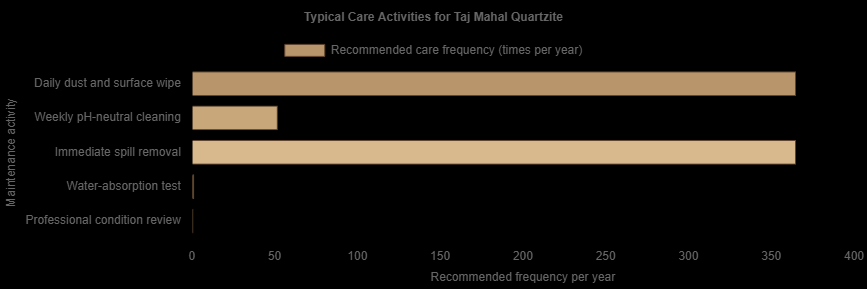
Natural quartzite generally requires routine dust removal, prompt spill cleaning, and pH-neutral products. A water-absorption test every 6–12 months can help determine whether resealing is needed; sealing intervals vary with usage, finish, and porosity. Avoid acidic or abrasive cleaners that may dull the stone surface.
Confirming Pricing, Sourcing, Fabrication, and Installation Standards
7 Tips for Choosing Taj Mahal Quartz Stone?
Taj Mahal quartzite is often sold as “quartz stone,” but it is natural stone, not engineered quartz. That distinction affects pricing, sealing, fabrication, and repair. The 2024 U.S. Houzz Kitchen Trends Study identifies quartz as a leading countertop choice, yet its findings should not be applied directly to quartzite. Ask for the quarry name, slab photographs, thickness, and a written material description. Color variation is natural. It is not a defect.
Confirm the delivered price, not only the square-meter rate. Request separate figures for slabs, crates, transport, cutting, edge profiles, sink openings, sealing, and installation. The U.S. Geological Survey’s Mineral Commodity Summaries 2024 treats dimension stone as a distinct mineral category, supporting careful classification during sourcing. A reputable fabricator should inspect each slab under bright, angled light and mark veins before cutting. Ask about ASTM C97 absorption testing and ASTM C170 compressive strength data when available. These reports provide evidence, although they cannot predict every seam or hidden fissure.
Installation needs a level, adequately supported cabinet base. Large overhangs may require concealed support. Use a qualified installer familiar with natural quartzite, because ordinary quartz cutting practices can cause chipping or dull edges. The final quote should state seam placement, joint width, adhesive type, sealing schedule, and damage liability. I would still allow extra material for replacement cuts. Perfect matching is rarely guaranteed.
FAQS
How can I confirm what stone I am buying?
Ask whether it is engineered quartz or natural quartzite. Request the quarry name, petrographic description, and batch test results. Labels can be confusing.
Which durability tests matter for natural stone?
Review water absorption, density, flexural strength, and abrasion resistance. ASTM C97 measures absorption and density. ASTM C880 measures flexural strength. ASTM C241 may provide extra abrasion information.
Is quartzite completely scratch-proof and stain-proof?
No. Its quartz content can provide strong scratch resistance. Open pores may still absorb cooking oil or coffee. Hardness is not the whole story.
How should I check a slab before installation?
Test a sample with coffee, cooking oil, and citrus for 24 hours. Watch for dark marks or dull areas. The result may disappoint. That is useful.
What should I inspect around a kitchen sink?
Examine the sink cutout for tiny fissures and weak corners. Ask the fabricator to inspect the underside. Reinforce overhangs and avoid sharp internal corners.
Which finish works better in a busy kitchen?
A polished finish reflects light and creates sparkle. It can also reveal fingerprints, glare, and window reflections. A honed finish hides minor marks but looks less luminous.
How can lighting change the stone’s appearance?
Place a full sample beside walls, cabinets, flooring, and backsplash materials. Check it in daylight and after sunset. Amber bulbs may make warm stone look too yellow.
How do I match the stone with my interior?
Pair warm stone with matte wood, brushed metal, or soft gray cabinets. Cream paint and aged brass can support beige and gold movement. Avoid competing patterns. I once preferred dramatic veining, but a quieter slab worked better. I still wonder whether stronger contrast would have added character.
Why should I avoid judging a small showroom sample?
Veining can change greatly across a full slab. Review slab direction, seams, edge profiles, and lighting positions before cutting. Small samples hide large decisions.
Conclusion
Choosing Taj Mahal Quartz Stone requires more than selecting an attractive color. Begin by understanding its natural appearance, composition, and overall visual character, then inspect each slab for consistent thickness, strong edges, and freedom from cracks or structural weaknesses. Compare available shades, veining patterns, and surface finishes to determine which option best suits your countertops, walls, or other applications. Its durability should also match the demands of the space, especially in kitchens, bathrooms, and high-traffic areas.
Consider how the stone will look under natural and artificial lighting, and make sure it complements your cabinetry, flooring, and interior style. Before purchasing, review its maintenance requirements, including sealing recommendations, daily cleaning methods, and resistance to stains or heat. Finally, evaluate the total project cost, material sourcing, fabrication precision, edge details, delivery, and installation standards. Careful planning will help ensure a beautiful, practical, and long-lasting result.
Related Posts

Top 10 White Crystal Nano Glass Stone Innovations in China?

How to Choose the Best Engineered Quartz Slabs for Your Project?

Best Translucent Quartz Slabs to Discover at China Import Expo?

Top 5 Tips for Sourcing Quality Artificial Stone Products?

2026 Best Artificial Stone Factory Innovations and Trends in Design?

2026 Top Trends in Artificial Marble for Modern Design Transformation?
Blog Tags:
Updated:

Olivia
Olivia is a dedicated marketing professional at Xiamen Yinxiang Artificial Marble Co., Ltd., a dynamic enterprise established in 2016 that specializes in artificial stone solutions. With a deep understanding of the industry and its nuances, Olivia excels in promoting the company's innovative......
 Why Is the Middle East Becoming China's Fastest-Growing Stone Market in 2026?
 What Is Artificial Translucent Stone and Where to Buy It?
 7 Tips for Choosing Taj Mahal Quartz Stone?
 Why Choose Quartz Slab for Global Projects?