Why Choose Quartz Slab for Global Projects?

Views:0
Update time:2026-09-11
0%

When you're working on big global projects, finding materials that can handle travel, stay consistent in quality, and are straightforward to install is a real game-changer. Quartz Slabs often check all those boxes. Because they’re made with a controlled mix, you get the same color, thickness, and surface look across different batches—important when you’re matching surfaces in a hotel lobby today and an airport lounge months down the line.

The market data backs this up too. According to Grand View Research, the global market for engineered stone is booming—thanks mainly to residential building, renovations, and commercial interiors. Meanwhile, Fortune Business Insights points out that durability, a wide variety of designs, and low maintenance keep driving demand. That’s why architects and procurement pros often compare Quartz Slab with natural stone, porcelain, or solid surfaces—they’re all vying for attention.

But let’s be clear—it’s not always an automatic choice.

Quartz Slab can definitely cut down on those annoying visual differences and make specifications simpler. Its nonporous surface also makes daily cleaning easier—if installed and cared for right. However, sourcing globally brings up some pretty real concerns. Shipping distances, controlling color batches, edge work, and local support can all impact the final look. You might see a sample that looks perfect, but when that slab arrives, it might not be an exact match.

And safety? That’s something you can’t ignore. Dr. Paul Blanc, a well-respected occupational health expert studying engineered stone exposure, has said, “Silicosis is completely preventable.” So, every fabricator should use wet cutting methods, proper local extraction, appropriate respiratory gear, and proven safety procedures. Organizations like NIOSH and OSHA offer solid guidelines to follow.

In the end, choosing Quartz Slab isn’t just about comparing colors and prices. You’ve got to dig deeper—look into the supplier’s experience, review testing documentation, see what kind of installation support they offer, check their environmental claims, and consider after-sales service. The material itself is capable, for sure. But making the right choice means careful planning and thoughtful consideration.

Why Choose Quartz Slab for Global Projects?

Quartz Slab: Definition, Composition, and Manufacturing Process

Quartz slab is an engineered stone panel, not a solid quartz crystal. Manufacturers blend crushed quartz aggregate with polymer resin, pigments, and small additives. Quartz commonly forms about 90–95% of the slab by weight, while resin binds the particles together. The exact ratio varies by product and production method.

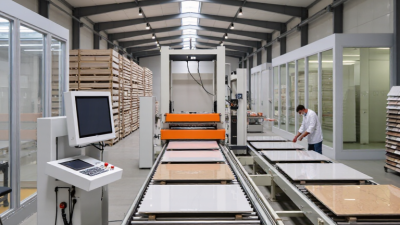
Manufacturing begins with graded quartz particles. Larger grains create visible texture; finer grains support smoother patterns. Vacuum mixing removes trapped air before the mixture enters a mold. Under vibration and pressure, the material becomes compact. It is then cured, often through controlled heating, and calibrated to a uniform thickness. Polishing exposes the selected aggregate and improves surface clarity. Small pores can still occur. Quality control matters.

Global projects require more than attractive samples. The U.S. Geological Survey’s 2024 Mineral Commodity Summaries identifies quartz as a major industrial mineral used in glass, construction, and other applications. This supports its broad supply relevance, although slab-grade feedstock is not identical everywhere. OSHA sets an 8-hour permissible exposure limit of 50 micrograms per cubic meter for respirable crystalline silica. Cutting and polishing therefore need wet processing, local extraction, and trained workers. The National Institute for Occupational Safety and Health also recommends exposure controls for engineered-stone fabrication. A practical weakness remains: resin can discolor under intense heat or ultraviolet exposure, and specifications may overlook this risk. That deserves closer review.

Why Choose Quartz Slab for Global Projects?

Typical Quartz Slab Composition by Mass

Engineered quartz slabs typically contain about 90% natural quartz minerals, combined with polymer binders, pigments, and performance additives. This composition provides high hardness, consistent appearance, low water absorption, and reliable dimensional stability for residential and commercial projects. Exact formulations may vary by product and manufacturing specification.

Key Performance Properties of Quartz Slab

For global projects, quartz slab earns attention through measurable performance, not visual novelty. Its engineered composition provides consistent color, density, and thickness across large batches. That consistency simplifies coordination between factories, installers, and site teams. A low-porosity surface resists common spills such as coffee, cooking oil, and diluted cleaning solutions. Daily cleaning usually needs a soft cloth, water, and neutral detergent. Simple matters.

Quartz slabs are hard and resist scratching under normal residential and commercial use. Still, hardness does not mean indestructibility. Sharp impacts at exposed corners can cause chipping. Proper edge detailing and professional fabrication reduce this risk. The material also offers good dimensional stability on a flat, properly supported substrate. Joint planning remains important for long counters and wall panels. In sunny areas, confirm the slab’s ultraviolet suitability. Some resin-based surfaces may discolor after prolonged exposure. Heat deserves equal caution. Hot cookware should rest on a trivet, especially near seams.

Reliable specification depends on test data, not assumptions. Request reports covering water absorption, abrasion, stain resistance, chemical resistance, and slip performance where relevant. Check local building requirements before approval. Site experience shows that substrate movement and rushed cutting cause more failures than ordinary household wear. That lesson is easy to overlook. Quartz slab is practical, but teams should match its properties with climate, use, and maintenance capacity. A realistic specification allows for human error, because even a strong surface can fail when details are ignored.

Design Options for Global Construction Projects

Design Options for Global Construction Projects

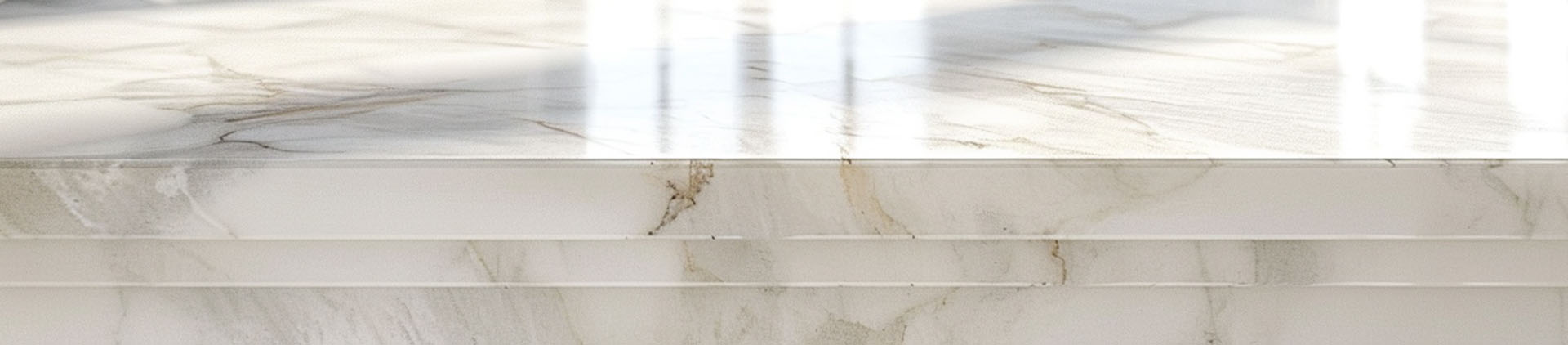
Quartz slabs give architects a broad design language for international construction projects. Their controlled patterns can support quiet hotel interiors, bright retail counters, or formal office receptions. Designers can select soft whites, concrete tones, warm neutrals, and dramatic veining. Large slabs also reduce visible joints across islands and wall panels.

Project teams should review more than color. Slab thickness affects weight, transport, edge profiles, and installation methods. Polished surfaces reflect light strongly, while honed finishes create a calmer appearance. Matte textures may hide fingerprints, but they can require more careful cleaning. Local fabricators should confirm cutting tolerances and available equipment before final approval. Digital samples help, yet physical samples remain more trustworthy.

Climate and building rules also influence design choices. Outdoor applications may require different materials because prolonged sunlight can affect some surfaces. Kitchens need suitable installation details around heat sources and sinks. Batch variation is usually controlled, but it is not impossible. We have seen small tone differences become obvious under bright project lighting. A full-size mock-up can expose that problem early. This step may slow procurement slightly. It can prevent expensive replacement work later. Good global design balances visual ambition with local skills, transport limits, maintenance habits, and reliable technical documentation.

Quartz Slab Applications Across Different Building Types

Why Choose Quartz Slab for Global Projects?

Quartz Slab Applications Across Different Building Types

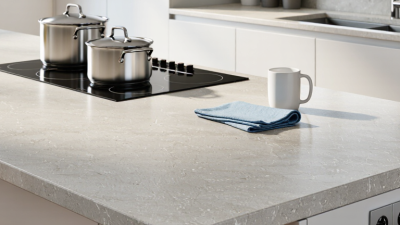
Quartz slab is used across many building types because it offers consistent appearance and practical surface performance. In residential kitchens, it creates broad worktops with fewer visible seams. Bathroom vanities also benefit from its low-porosity surface and simple daily cleaning.

In hotels, designers often specify quartz slab for reception counters, guest bathrooms, and dining areas. These surfaces face luggage, cosmetics, spills, and frequent cleaning. In offices, large slabs can cover pantry counters, meeting tables, and shared washroom vanities. The visual continuity helps busy interiors feel more organized.

Retail spaces require careful planning. Counter edges, display platforms, and wall panels must resist regular contact and repeated handling. In healthcare buildings, installers should coordinate slab selection with hygiene requirements, joint detailing, and cleaning procedures. Surface material alone does not create a safe environment. Workmanship matters.

Schools and public buildings can use quartz slab in service counters, libraries, and restroom areas. However, large projects need documented testing, accurate measurements, and reliable fabrication partners. Site teams should check access routes before production. A beautiful slab is useless if it cannot enter the building.

Quartz is not maintenance-free. Strong impact, excessive heat, poor support, or careless installation can still cause damage. I have found that early coordination prevents more problems than late repairs. The best results come from matching slab thickness, edge design, substrate support, and local building conditions.

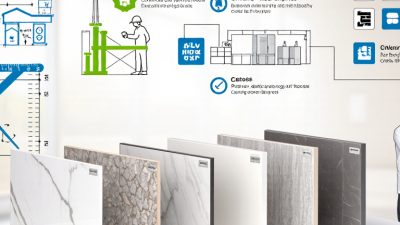
International Standards, Certifications, and Quality Control

Global projects demand more than attractive quartz slabs. They require documented compliance across borders. ISO 9001 certification signals a controlled quality-management system, while ISO’s 2022 Survey recorded 1,265,216 certificates worldwide. This figure shows its broad acceptance, but certification alone proves little about every shipment. Project teams should request current certificates, test reports, and factory audit records.

Reliable producers test water absorption, flexural strength, stain resistance, dimensional accuracy, and surface consistency. European projects may reference EN 14617 test methods, while North American specifications often require ASTM-based procedures. Food-service applications can also require NSF/ANSI 51 compliance. Low-emission documentation matters indoors; third-party indoor-air certifications can support healthier building assessments. Grand View Research’s 2024 engineered-stone analysis forecasts a 5.6% compound annual growth rate through 2030, increasing the need for repeatable production rather than attractive samples alone.

Look closely at the controls. Each slab should carry a batch code, inspection record, and packing reference. Calibrated gauges should verify thickness and edge tolerances. Color panels should be compared under consistent lighting. Small variations remain possible. Natural-looking patterns are never perfectly uniform. That is acceptable, but uncontrolled variation is not. Export packaging, moisture protection, and container loading also deserve inspection. A factory may pass an audit and still mishandle one container. Independent pre-shipment checks remain valuable.

Why Choose Quartz Slab for Global Projects? - International Standards, Certifications, and Quality Control
Quality Dimension Relevant Standard or Certification What It Verifies Objective Data or Requirement Recommended Project Evidence Global Project Value
Quality management ISO 9001:2015 Whether the organization operates a documented quality management system with controlled processes, corrective actions, and continual improvement. Management-system standard
It does not certify the performance of a specific quartz slab.
Valid certificate, certification scope, issuing body, audit validity, and documented batch traceability. Creates a consistent framework for purchasing, production, inspection, complaints, and corrective action across international supply chains.
Environmental management ISO 14001:2015 Whether environmental aspects, legal obligations, resource use, waste, and improvement targets are managed systematically. Management-system standard
Certification covers the stated operational scope, not an automatic environmental rating for every slab.
Certificate scope, environmental objectives, waste-control records, and evidence of legal compliance. Supports environmental due diligence and sustainability documentation for architects, contractors, and public tenders.
Laboratory competence ISO/IEC 17025:2017 The technical competence, impartiality, and consistent operation of a testing or calibration laboratory. Laboratory standard
Accreditation applies to specified test methods and scopes.
Accredited laboratory report showing the exact method, specimen details, test date, results, and accreditation scope. Improves confidence that water absorption, strength, abrasion, and other reported results are technically reliable and comparable.
Physical performance EN 14617 series Test methods for agglomerated stone products, including dimensions, water absorption, flexural strength, impact resistance, abrasion, and chemical resistance, depending on the applicable part. Performance test series
The applicable test part depends on the property being evaluated.
Third-party test report identifying the product, thickness, conditioning, test method, result, and acceptance criteria. Provides a recognized European testing basis for comparing engineered stone performance between projects and markets.
Dimension and flatness control Project specification plus applicable EN 14617 dimensional methods Slab length, width, thickness, squareness, edge condition, and flatness within the tolerances agreed for fabrication and installation. Project-specific tolerance
Tolerances must be stated in the purchase specification because they vary by product and application.
Inspection plan, calibrated measuring tools, dimensional inspection records, and photographs of marked slabs. Reduces cutting waste, joint alignment problems, installation delays, and disputes on large-format international projects.
Food-contact suitability NSF/ANSI 51, where applicable Material suitability for food equipment and food-zone applications when the product is evaluated and certified for the relevant use. Application-specific
Certification should be verified for the exact product, finish, and intended food-contact use.
Current certification listing or certificate, product identification, use limitations, and installation instructions. Helps meet hygiene and material-selection requirements for commercial kitchens, hospitality, healthcare, and food-service environments.
Indoor air emissions UL 2818 / GREENGUARD Gold program, where applicable Volatile organic compound emissions from certified building products under defined chamber-testing conditions. Emissions certification
Certification applies only to the tested product and specified configuration.
Current certificate or listing, tested product code, manufacturing location, and certificate validity. Supports low-emitting-material requirements in green-building specifications and indoor-environment assessments.
Fire and building-code review EN 13501-1 or local fire-classification method, where required Reaction-to-fire classification under the applicable regional building-code framework. Market-specific
Classification depends on composition, thickness, substrate, installation, and the test configuration.
Fire-test report or classification report for the exact product assembly and intended application. Provides code-compliance evidence for façades, wall cladding, commercial interiors, and other regulated applications.
Batch consistency Internal quality-control plan aligned with ISO 9001 principles Consistency of color, pattern, gloss, thickness, surface finish, and defect limits from batch to batch. Controlled by specification
Acceptable variation and defect criteria should be defined before production.
Approved reference sample, batch photographs, shade-control records, inspection checklist, and retained samples. Protects visual continuity when slabs are shipped in multiple containers or produced in different batches.
Traceability and logistics Documented lot and container traceability Ability to link each slab to its production batch, inspection status, packing list, shipping documents, and destination. Supply-chain control
Traceability should remain intact from production through installation.
Slab identification, lot number, packing list, container record, inspection release, and delivery receipt. Enables faster claims handling, targeted replacement, customs documentation, and controlled installation sequencing.
Fabrication safety OSHA respirable crystalline silica requirements or applicable local regulations Controls worker exposure to respirable crystalline silica during cutting, grinding, drilling, and polishing of engineered stone. Legal requirement
For U.S. general-industry and construction rules, OSHA’s permissible exposure limit is 50 micrograms per cubic meter of air as an 8-hour time-weighted average.
Wet-processing procedures, local exhaust ventilation, exposure assessment, respiratory-protection program, training records, and safety data sheet. Supports responsible fabrication and helps international contractors manage a significant occupational-health risk.
Note: Standards and certifications must be checked against the exact slab product, thickness, finish, intended application, manufacturing site, destination country, and current certificate validity. A management-system certification does not replace product-performance testing.

Sourcing, Shipping, and Installation Considerations Worldwide

Why Choose Quartz Slab for Global Projects?

Sourcing, Shipping, and Installation Considerations Worldwide

Quartz slabs suit global projects because they offer consistent color, controlled thickness, and repeatable fabrication. Yet sourcing is only the beginning. UNCTAD’s Review of Maritime Transport reports that over 80% of global merchandise trade moves by sea. Therefore, packaging, port selection, and delivery timing deserve serious attention. Use reinforced crates, moisture protection, and clear handling labels. Confirm slab dimensions before booking containers. A few centimeters can create expensive problems.

Tips: Request production samples, packing photos, and an inspection report before shipment. Keep spare slabs for visible areas. Do not assume local replacement stock exists.

The World Bank’s 2023 Logistics Performance Index evaluates 139 economies through customs, infrastructure, logistics competence, and timeliness. These differences affect every quartz project. Check import documents, unloading equipment, local storage, and inland road access early. Installation also needs local expertise. Fabricators should verify site measurements, cabinet support, seams, cutouts, and edge details. Quartz contains crystalline silica, so cutting requires effective dust control and compliance with local occupational standards. The U.S. Occupational Safety and Health Administration identifies respirable silica as a serious workplace hazard. A perfect schedule on paper can still fail when walls are uneven or elevators are unavailable. Plan for that. Recheck the substrate, because small errors become highly visible after polishing.

FAQS

: What is a quartz slab?

: A quartz slab is an engineered stone panel. It is not a solid quartz crystal. It usually contains about 90–95% crushed quartz by weight. Polymer resin binds the particles together. Pigments create different colors and patterns.

How is a quartz slab manufactured?

Graded quartz particles are mixed with resin and pigments. Larger particles create visible texture. Finer particles produce smoother patterns. Vacuum mixing removes trapped air. Vibration and pressure compact the mixture inside a mold. Controlled heating cures the panel. Calibration creates an even thickness. Polishing reveals the selected aggregate.

Can quartz slabs contain small pores?

Yes, small pores can still occur. Vacuum mixing reduces trapped air, but it does not guarantee perfection. Quality control remains important. The surface may look uniform while hiding minor internal variation. That possibility deserves honest review.

Where can quartz slabs be used?

They suit kitchens, bathrooms, hotels, offices, schools, and public buildings. Common uses include worktops, reception counters, vanities, wall panels, and service counters. They can also cover meeting tables and display platforms. Large surfaces may show fewer visible seams.

Are quartz slabs suitable for busy commercial spaces?

Often, yes. They handle regular contact and repeated cleaning. Hotels may use them near luggage areas and guest bathrooms. Retail counters need careful edge planning. Healthcare projects require suitable cleaning procedures and joint details. The surface alone does not ensure a safe environment.

Are quartz slabs maintenance-free?

No. Strong impacts can cause chips or cracks. Excessive heat may damage resin. Intense ultraviolet exposure can cause discoloration. Poor support can create stress. Routine cleaning is simple, but careless use still matters.

What safety measures are needed during fabrication?

Cutting and polishing can release respirable crystalline silica dust. Workers should use wet processing and local extraction. Trained teams should follow current local exposure rules. Protective procedures need regular checking. A beautiful finished surface is not worth unsafe fabrication.

What should project teams check before ordering slabs?

Confirm thickness, measurements, edge details, support conditions, and cleaning requirements. Check delivery routes before fabrication begins. Measure doorways, lifts, stairs, and tight corners. Review heat and ultraviolet exposure. Local building conditions may change the best specification. I might be too optimistic, but early coordination usually prevents expensive repairs.

Conclusion

Quartz Slab is an engineered surfacing material made by combining natural quartz minerals with carefully selected binders and pigments, followed by pressing, curing, and precision finishing. Its dense structure provides strong resistance to stains, scratches, moisture, and everyday wear, making it a practical option for demanding construction environments. Available in a wide range of colors, patterns, textures, and edge profiles, it can support both contemporary and traditional design concepts while maintaining visual consistency across large projects.

Suitable for residential, hospitality, commercial, healthcare, and public buildings, Quartz Slab can be used for countertops, vanities, wall cladding, reception areas, and other interior surfaces. For international projects, buyers should review relevant standards, certifications, testing records, and factory quality-control procedures. Successful sourcing also requires careful attention to slab dimensions, packaging, documentation, shipping conditions, local handling, and professional installation. With coordinated planning from material selection through final fitting, Quartz Slab can deliver reliable performance, design flexibility, and efficient project support in different regions.

Isabella

Isabella

Isabella is a dedicated marketing professional at a leading artificial stone enterprise established in 2016. With a deep understanding of the industry, she excels in showcasing the company’s innovative products and services. Isabella is passionate about research and development, playing a vital......
Related News
Read More >>
Why Choose Quartz Slab for Global Projects? Why Choose Quartz Slab for Global Projects?
2026-09-11
Why Choose Quartz Slab for Global Projects? .section-banner-wrap-b···
Top 10 Benefits of Using Artificial Marble Blocks for Your Projects? Top 10 Benefits of Using Artificial Marble Blocks for Your Projects?
2026-09-11
Top 10 Benefits of Using Artificial Marble Blocks for Your Project···
What Does China's 2026 Stone Export Tax Rebate Removal Mean for Your Procurement? What Does China's 2026 Stone Export Tax Rebate Removal Mean for Your Procurement?
2026-09-10
What Does China's 2026 Stone Export Tax Rebate Removal Mean fo···
Translucent Quartz Slab Benefits and Best Suppliers Worldwide? Translucent Quartz Slab Benefits and Best Suppliers Worldwide?
2026-09-04
Translucent Quartz Slab Benefits and Best Suppliers Worldwide? .se···

Leave Your Message