
7 Best Artificial Quartz Slab Suppliers Worldwide?
7 Best Artificial Quartz Slab Suppliers Worldwide?
0%
Table of Contents
What Defines Artificial Quartz: 90–95% Mineral Content and Resin Binders
Caesarstone: Evaluating Global Distribution, Design Range, and Certifications
Cambria: Assessing Premium Manufacturing, Warranty Coverage, and Retail Reach
Silestone by Cosentino: Comparing Sustainability, Innovation, and Product Scale
Vicostone: Reviewing Export Capacity, Designs, and International Quality Standards
Compac, Quartzforms, and Santa Margherita: European Production Benchmarks
How to Rank Suppliers Using Mohs 6–7 Hardness and Water Absorption Below 0.5%
Choosing an Artificial Quartz Slab supplier is more complex than comparing catalog photographs. A polished white surface may look identical online, yet its batch consistency, resin formulation, edge behavior, and warranty support can differ greatly. This guide introduces seven leading suppliers worldwide and explains what deserves closer inspection before a project begins.
Eduardo Cosentino, President of Cosentino, has said, “Innovation is in our DNA.” That idea matters here. Reliable suppliers should combine design development with measurable manufacturing control, responsible sourcing, and practical technical assistance. Names such as Caesarstone, Cambria, Silestone, Vicostone, MSI Surfaces, HanStone Quartz, and Quantum Quartz are widely recognized in international markets. Their strengths are not identical. Some emphasize premium design. Others compete through broad distribution, commercial durability, or flexible collection sizes.
Look beyond the showroom sample. Ask for current technical data, thickness tolerance, water absorption results, heat guidance, and installation requirements. Check whether the color comes from one stable production lot. Small differences can become obvious across a large kitchen island. Very obvious.
The comparison also needs a human layer. Does the supplier answer fabricator questions quickly? Can local distributors replace damaged slabs? Are claims handled clearly? These details often matter more than a dramatic veining pattern. Still, no supplier is perfect, and published specifications do not predict every cutting or transport problem. That is worth admitting. A careful buyer should test samples, consult a qualified fabricator, and confirm regional availability before choosing an Artificial Quartz Slab for residential, hospitality, or commercial use.

Table of Contents [Hide]
1 What Defines Artificial Quartz: 90–95% Mineral Content and Resin Binders
2 Caesarstone: Evaluating Global Distribution, Design Range, and Certifications
3 Cambria: Assessing Premium Manufacturing, Warranty Coverage, and Retail Reach
4 Silestone by Cosentino: Comparing Sustainability, Innovation, and Product Scale
5 Vicostone: Reviewing Export Capacity, Designs, and International Quality Standards
6 Compac, Quartzforms, and Santa Margherita: European Production Benchmarks
7 How to Rank Suppliers Using Mohs 6–7 Hardness and Water Absorption Below 0.5%
What Defines Artificial Quartz: 90–95% Mineral Content and Resin Binders
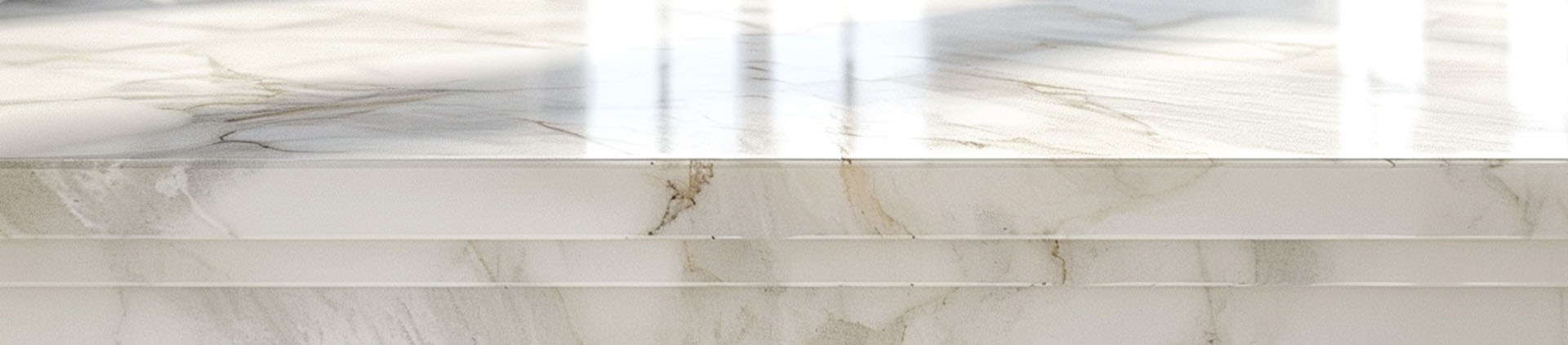
Artificial quartz slabs are engineered surfaces, not solid stone pulled directly from a quarry. Most formulations contain 90–95% ground mineral, usually quartz, combined with polymer resin binders and pigments. This high mineral content creates a dense surface, consistent patterns, and low water absorption. A cut sample often shows fine mineral grains held within a smooth matrix. That small detail matters.
Resin binds the mineral particles during pressing and curing. It also helps control color, texture, and edge finishing. However, resin is not indestructible. Excessive heat, strong sunlight, or unsuitable chemicals may damage the surface over time. Outdoor use therefore requires careful review of technical specifications. Experienced fabricators also examine slab thickness, flatness, calibration, and edge behavior before installation. These checks can reveal problems that a polished showroom sample hides.
When comparing worldwide suppliers, request composition data, independent test reports, batch information, and clear care instructions. Ask how the supplier controls particle grading and curing temperature. Reliable documentation should match the physical slab. It should not merely sound impressive. Some surfaces may look identical under bright lighting yet perform differently near a cooktop or window. My own caution is simple: mineral percentage alone does not prove quality. Manufacturing discipline, traceability, and honest performance limits deserve equal attention.
Caesarstone: Evaluating Global Distribution, Design Range, and Certifications
When evaluating a global artificial quartz slab supplier, distribution often reveals more than advertising. Regional warehouses can shorten lead times and reduce damage during long-distance shipping. Ask whether stock is held locally or shipped after purchase. That distinction affects project schedules, replacement orders, and installation costs. I have seen attractive samples delayed because popular colors were unavailable nearby.
Design range should be judged through physical samples, not catalog images alone. A reliable supplier may offer concrete, marble, terrazzo, and solid-color surfaces. Look closely at veining, edge consistency, slab thickness, and finish under showroom lighting. Large-format options can reduce seams on kitchen islands. However, a wide collection may include repeated patterns that look artificial across several slabs. This is easy to overlook.
Certification records require careful checking. Request current documents for relevant standards, such as ISO 9001, NSF/ANSI 51, or indoor-emissions testing, where applicable. Confirm that each certificate matches the manufacturer, product series, and production site. Certificates can expire or cover only selected colors. I would also verify safety data, warranty terms, and installer guidance before specifying the material. My assessment would remain incomplete without checking how the supplier handles breakage, color variation, and claims across different countries.
Cambria: Assessing Premium Manufacturing, Warranty Coverage, and Retail Reach
Premium quartz manufacturing is judged by more than polished showroom samples. The featured supplier emphasizes controlled slab production, consistent veining, and documented quality checks. These details matter because small shade differences become obvious across a large kitchen island. Grand View Research valued the global quartz countertop market at approximately USD 11.39 billion in 2023, with continued growth expected through 2030. That expansion increases pressure on manufacturers to maintain reliable batch consistency.
The supplier’s limited lifetime warranty supports a premium position, but buyers should read every condition. Coverage commonly depends on professional installation, residential use, proof of purchase, and registration. Some warranties exclude discoloration, impact damage, poor support, or outdoor applications. That distinction is important. A long warranty is not automatically broad protection. The International Surface Event industry guidance also stresses correct fabrication, seam placement, and maintenance procedures, which can affect warranty outcomes.
Retail reach is another practical strength. A wide dealer network gives customers access to physical samples, trained fabricators, and replacement support. It also reduces the risk of choosing colors from inaccurate online images. Yet reach can be uneven by country, and service quality may vary between dealers. That weakens a perfectly polished brand story. Buyers should request local installer credentials, written warranty terms, and batch confirmation before ordering. The assessment remains positive, though not unquestionable. Premium pricing deserves measurable manufacturing discipline, transparent coverage, and dependable after-sales access.
Silestone by Cosentino: Comparing Sustainability, Innovation, and Product Scale
Evaluating a global artificial-quartz supplier requires more than showroom appeal. A credible review should examine recycled content, resin chemistry, energy use, warranty evidence, and production capacity. The 2024 Global Status Report for Buildings and Construction reports that buildings account for 32% of global energy demand and 34% of global carbon dioxide emissions. That context makes manufacturing transparency highly relevant, even for a kitchen surface.
A strong supplier publishes environmental product declarations, or EPDs, instead of relying on vague “green” claims. EPDs can disclose climate impact, resource use, and factory data across a product’s life cycle. Innovation should also appear in slab consistency, stain resistance, digital fabrication, and repair guidance. In practice, installers notice details quickly: a clean edge, stable color, and fewer broken corners during cutting. Small failures matter.
Scale is another test. Multiple factories, regional inventories, and documented quality controls can reduce delays on large hospitality projects. However, artificial quartz is not tracked as a separate category in many public mineral datasets. The USGS Mineral Commodity Summaries 2024 does not isolate engineered-quartz slab production, limiting direct global comparisons. That gap deserves attention. A supplier may report impressive output, yet buyers still need audited figures, current EPDs, and independent testing. Sustainability claims can sound polished. They are not always complete.
Engineered Quartz Slab Composition
Typical mass composition of artificial quartz slabs: approximately 90% natural quartz aggregate, 8% polymeric binder, and 2% pigments and performance additives. Actual formulations vary by product and manufacturer.
Reference basis: commonly published technical data for engineered quartz surfaces and industry composition ranges. Values are representative, not a brand-specific product comparison.
Vicostone: Reviewing Export Capacity, Designs, and International Quality Standards
Export capacity is more than a polished catalog. A reliable artificial quartz slab supplier should disclose plant capacity, monthly output, container loading, and average lead times. Grand View Research estimated the global quartz market at about US$11 billion in 2023, with continued growth through 2030. That expansion increases competition, but it also makes production evidence more important. Buyers should request recent shipping records, factory photographs, and batch-level inspection reports. Port access matters too. Delays can damage large hotel or residential projects.
Design capability deserves equal attention. Current collections often include concrete textures, fine veining, terrazzo effects, and low-variation surfaces. Digital images can mislead. A physical sample should show color consistency, edge behavior, thickness tolerance, and polishing quality under warm and cool lighting. Large-format slabs need careful checking around corners and cut-outs. Small defects become obvious after installation. Honest suppliers should explain acceptable variation, not hide it.
International standards provide a stronger verification framework. ISO 9001 supports documented quality control, while ISO 14001 addresses environmental management systems. Depending on the market, buyers may also request testing aligned with EN 14617 or relevant ASTM methods for water absorption, flexural strength, and stain resistance. Certifications alone are not enough. Independent laboratory reports should match the exact product series and production period. Some supplier claims remain vague, and that is a warning sign. A stronger audit combines documents, factory inspection, random testing, and references from completed export projects.
Compac, Quartzforms, and Santa Margherita: European Production Benchmarks
European artificial quartz production is often judged by consistency, not appearance alone. A reliable supplier controls mineral grading, resin mixing, pressing, curing, and polishing under documented procedures. Small variations matter. They can affect color, edge strength, and installation results.
During supplier evaluations, inspect full slabs under natural and angled light. Check for pinholes, resin clouds, uneven gloss, and repeated veining patterns.
European facilities commonly emphasize automated calibration, closed-loop water systems, and batch traceability. These details support dependable quality across large commercial orders.
Independent testing should confirm stain resistance, abrasion performance, flexural strength, and heat tolerance. Certificates help, but they never replace physical inspection.
Production benchmarks are not perfectly uniform. Some suppliers publish clearer technical data than others. That gap deserves attention. A strong partner explains acceptable tolerances, repair procedures, packaging standards, and delivery controls before signing a contract.
Ask for recent batch samples, not only showroom pieces. Compare slab thickness with a micrometer. Review pallets for corner protection and moisture damage.
Sustainable claims also need evidence, such as recycled content records and verified environmental documentation. European manufacturing offers a useful quality reference, yet buyers should still examine each factory, product line, and shipment independently. Consistency must be proven repeatedly.
How to Rank Suppliers Using Mohs 6–7 Hardness and Water Absorption Below 0.5%
The best artificial quartz slab suppliers should be ranked by verified performance, not showroom gloss. Mohs 6–7 indicates strong scratch resistance, but the Mohs scale is ordinal, not a complete durability certificate. A practical ranking gives high scores to suppliers providing independent test reports, consistent batch data, and clear quality controls.
ASTM C97/C97M-24 provides a recognized method for measuring water absorption in stone products. Set a strict target below 0.5%, then request results from multiple production batches. The Natural Stone Institute’s Dimension Stone Design Manual also treats absorption, abrasion, and finish stability as important selection factors. Do not accept one attractive sample as proof. Resin ratios and curing conditions can change performance. This is where many comparisons become imperfect.
Tips: Ask for the slab’s Mohs test method, laboratory name, test date, and absorption percentage. Check edges, cutouts, and the underside for pinholes. Request a retained sample before placing a large order. Compare seven suppliers using the same scorecard: 40% hardness evidence, 40% absorption results, and 20% traceability. Suppliers unable to disclose batch records should rank lower, even when their quoted price looks attractive. A low absorption number alone does not guarantee stain-proof behavior, especially around seams and poorly sealed installations.
FAQS
What is artificial quartz made of?
It usually contains 90–95% ground mineral, often quartz, plus resin binders and pigments.
Why does resin matter in artificial quartz slabs?
Resin holds mineral particles together during pressing and curing.
Can artificial quartz be used outdoors?
Outdoor use requires careful review of technical specifications.
How should buyers inspect a slab before installation?
View the full slab under natural and angled light.
Which documents should suppliers provide?
Request composition data, independent test reports, batch records, and care instructions.
What performance indicators help rank suppliers?
Use verified hardness, water absorption, and traceability.
Is water absorption below 0.5% enough to prove quality?
No. Low absorption is useful, but it does not guarantee stain-proof performance.
How can buyers compare several suppliers fairly?
Use one scorecard for every supplier.
Conclusion
Artificial Quartz Slab is engineered from approximately 90–95% natural mineral content combined with resin binders, creating a durable, low-maintenance surface for residential and commercial applications. When evaluating worldwide suppliers, buyers should consider manufacturing consistency, design variety, international distribution, product certifications, warranty terms, retail availability, and the company’s ability to maintain stable quality across different markets. Sustainability initiatives, advanced production technology, export capacity, and compliance with recognized international standards are also important indicators of supplier reliability.
A practical comparison should focus on measurable performance rather than reputation alone. Key benchmarks include Mohs hardness between 6 and 7, water absorption below 0.5%, consistent color and thickness, strong stain resistance, and dependable technical support. European and other established production centers may offer valuable reference points for quality control, innovation, and design development. By balancing performance data, certification records, service coverage, and long-term supply capability, purchasers can identify the most suitable artificial quartz supplier for their specific project requirements.
Related Posts

Why Choose an Artificial Stone Factory for Global Buyers?

Why Choose Quartz Slab for Global Projects?

2026 How to Choose and Care for Artificial Marble Surfaces?

What is Artificial Marble and How is it Used in Modern Design?

China Best Artificial Marble Applications and Trends in 2026?

How to Choose Quartz Kitchen Worktops for Your Home?
Blog Tags:
Updated:

Isabella
Isabella is a dedicated marketing professional at a leading artificial stone enterprise established in 2016. With a deep understanding of the industry, she excels in showcasing the company’s innovative products and services. Isabella is passionate about research and development, playing a vital......
 7 Best Artificial Quartz Slab Suppliers Worldwide?
 Why Choose Sintered Stone Countertops?
 Why Choose an Artificial Stone Factory for Global Buyers?