
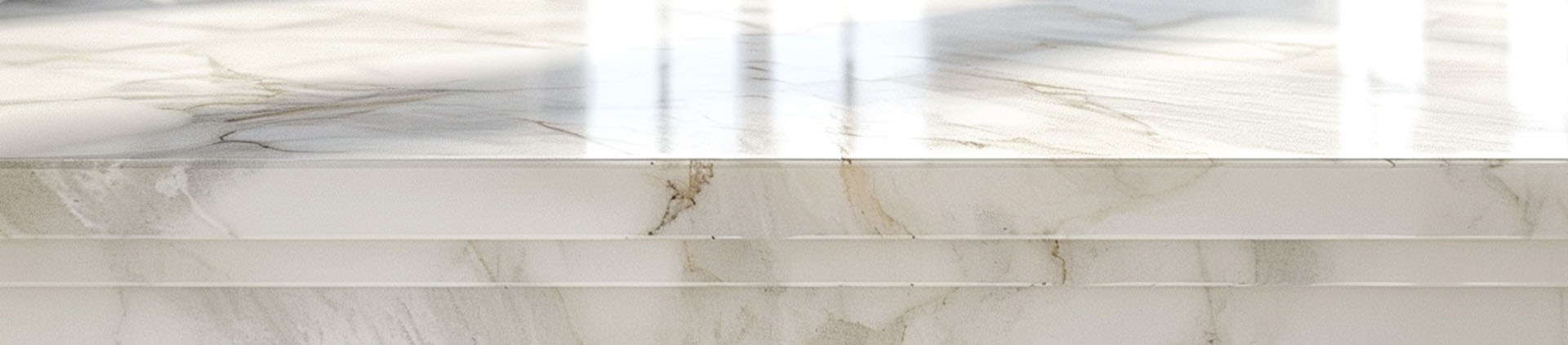
What Are the Top 10 Taj Mahal Quartz Stone Types?
What Are the Top 10 Taj Mahal Quartz Stone Types?
0%
Table of Contents
So, how do you pick the right surface? It really starts with knowing what “Taj Mahal” actually means in the market. Taj Mahal Quartz Stone is a popular pick—people love that warm ivory background, the soft beige movement, and those subtle gold veins. It works beautifully for a calm kitchen island, a bright bathroom vanity, or even a polished commercial reception desk. Just keep in mind: no two slabs are exactly alike.
So, this guide looks at ten of the most popular Taj Mahal Quartz Stone types and the different looks you can find from trusted manufacturers and distributors. We compare things like how deep the color is, the veining, finish, thickness, durability, upkeep, and what you'll actually need for installation. Polished surfaces? They can catch pendant lights in a really pretty way. Honed finishes tend to feel softer and more natural when you run your hand over them. Some slabs have bold caramel streaks, while others are almost completely creamy and uniform.
Honestly, real projects are where you learn the most. Samples can give you a hint, sure, but seeing a full slab is what really shows the design. Small displays? They don't always capture movement, how the shade shifts, or repeating patterns. And lighting is a big deal too—a slab next to a window can look totally different under warm evening lamps. That's why this guide doesn't act like one style is the best for everyone. Your own taste, the size of the room, cabinet color, budget—all of that plays into it.
There's just no perfect ranking.
You'll find some helpful tips here for comparing how a surface looks with how it actually holds up day to day. The discussion also points out a few questions worth asking suppliers—things like certification, how it's made, warranty coverage, and whether batches stay consistent. Trust me, those details can save you from some costly surprises. You might notice some overlap in descriptions, though, since product names can vary by region and brand. It's a limitation worth keeping in mind. At the end of the day, it still pays to look carefully before you order or install any surface.

Table of Contents [Hide]
1 What Is Taj Mahal Quartz and How Is It Classified?
2 How the Top 10 Taj Mahal Quartz Types Are Identified
3 The Top 10 Taj Mahal Quartz Types by Color and Veining
4 Key Differences in Pattern, Finish, and Visual Movement
5 How to Choose the Right Taj Mahal Quartz Type for Your Space
6 Durability, Maintenance, and Practical Buying Considerations
What Is Taj Mahal Quartz and How Is It Classified?
“Taj Mahal quartz” is a commercial design name, not a universal mineral classification. It usually describes an engineered quartz surface with a warm white background, beige movement, and soft gold veining. Actual composition varies. Many products contain roughly 90–93% quartz minerals, while resins, pigments, and additives form the balance. Always check the technical sheet.
In showrooms, the ten common visual types are classic white-gold, ivory-gold, soft-veined, bold-veined, cloudy, layered, linear, crystalline, polished, and honed. These labels describe appearance, not performance.
A 2024 Grand View Research report estimated the global engineered stone market at about USD 30 billion in 2023, with continued growth through 2030. That figure reflects a broad category, so it cannot prove one “Taj Mahal” slab is better than another.
Professional classification should examine four details: base color, vein direction, pattern density, and surface finish. A thin, scattered vein often reads calmer than a dense, dramatic pattern. Polished finishes amplify light; honed finishes soften reflections but may reveal fingerprints. ASTM testing can help compare water absorption, abrasion, and flexural strength, yet tests do not replace installation judgment. I would not classify a slab from a small sample alone. Lighting changes everything. Some labels also seem inconsistent across suppliers, which is frustrating but worth acknowledging. Ask for the batch code, full-size photographs, care guidance, and test results before approval.
How the Top 10 Taj Mahal Quartz Types Are Identified
Taj Mahal quartz types are identified by appearance, structure, and light response. The names are descriptive, not universal industry standards. A reliable inspection starts with the slab in natural daylight. Artificial lighting can hide yellow or gray undertones. I compare the background color, vein movement, grain, and translucency across several areas.
Common visual types include Classic Ivory, Soft White, Warm Cream, Golden Vein, Taupe Vein, Linear Vein, Clouded, Fine-Grained, Dramatic Vein, and Low-Variation Taj Mahal.
Classic Ivory has a balanced cream base and gentle movement. Soft White appears brighter and less yellow. Warm Cream shows beige depth near the edges. Golden Vein contains honey-colored lines. Taupe Vein adds cooler gray-brown detail.
Linear Vein has longer, directional markings. Clouded types resemble soft brushstrokes. Fine-Grained slabs look quieter from a distance. Dramatic Vein has stronger contrast. Low-Variation material stays visually consistent across the surface.
I check a dry sample first, then view it slightly wet. Water can temporarily deepen the stone’s color. I also inspect the cut edge for mineral layering and translucency. A polished surface reflects more light, while a honed finish can make the base appear softer. One mistake is judging from a small showroom sample. Large slabs may reveal wider veins or unexpected patches. A professional fabricator should confirm the full slab, thickness, finish, and vein direction before cutting. Natural variation remains part of the identification process.
The Top 10 Taj Mahal Quartz Types by Color and Veining
What Are the Top 10 Taj Mahal Quartz Stone Types?
The top 10 Taj Mahal quartz types differ mainly in color and veining. Popular options include Classic Ivory, Soft White, Warm Cream, Pale Beige, Champagne Gold, Taupe Mist, Gray Vein, Linear Gold, Cloudy Marble, and Bold Vein. Classic Ivory offers a clean background with gentle movement. Champagne Gold adds thin, sunlit lines across a creamy surface. Gray Vein creates stronger contrast. It feels more architectural.
The 2024 Houzz U.S. Kitchen Trends Study reported quartz as the leading countertop material, selected in about 39% of renovated kitchens. That demand reflects quartz’s consistent color, low porosity, and easier maintenance. The National Kitchen and Bath Association’s 2024 design report also noted continued interest in warm neutrals and natural-looking surfaces. These findings support cream, beige, and soft-gold Taj Mahal patterns. Yet color samples can mislead. Lighting changes everything.
In a showroom, inspect each slab under cool LEDs and warm daylight. Look for repeated vein patterns, uneven pigment, and visible seams near sinks. Soft White and Cloudy Marble suit compact kitchens because they reflect more light. Bold Vein and Taupe Mist work better on large islands with simple cabinetry. Linear Gold may look elegant from a distance but busy up close. That detail deserves honest consideration. ASTM testing standards can confirm absorption and strength, but they cannot measure visual harmony. Experience still matters.
What Are the Top 10 Taj Mahal Quartz Stone Types? - The Top 10 Taj Mahal Quartz Types by Color and Veining
| No. | Taj Mahal Quartzite Type | Dominant Color | Veining Style | Typical Mineral Tones | Visual Character | Suitable Applications |
|---|---|---|---|---|---|---|
| 1 | Classic Ivory Taj Mahal | Soft ivory and warm cream | Fine, flowing gray-beige lines | Quartz, feldspar, and subtle mica tones | Balanced and understated, with a warm marble-like appearance | Kitchen countertops, islands, bathroom vanities, and wall panels |
| 2 | Golden Vein Taj Mahal | Cream with honey and beige undertones | Visible gold-colored sweeping veins | Iron-stained beige and ochre accents | Warm, decorative, and visually rich | Feature islands, fireplace surrounds, reception counters, and statement walls |
| 3 | Soft Gray Taj Mahal | Light gray, ivory, and pale taupe | Diffuse gray movement with delicate linear veins | Gray quartz and mica-rich mineral variation | Cooler and more contemporary than warmer selections | Modern kitchens, bathroom surfaces, floors, and commercial interiors |
| 4 | White-Background Taj Mahal | Pale white to creamy white | Low-contrast gray and beige veining | Predominantly light quartz with feldspar variation | Bright, clean, and relatively subtle | Light-colored countertops, backsplashes, vanity tops, and minimalist interiors |
| 5 | Dramatic Vein Taj Mahal | Ivory, cream, and pale beige | Broad diagonal or sweeping veins with strong movement | Gray, gold, taupe, and occasional darker mineral accents | High-impact and naturally unique from slab to slab | Large islands, waterfall edges, book-matched walls, and fireplaces |
| 6 | Linear Vein Taj Mahal | Cream and light beige | Long, parallel or gently undulating lines | Gray quartz bands with beige mineral staining | Directional and elegant, with a streamlined appearance | Long islands, bar tops, horizontal wall cladding, and contemporary cabinetry |
| 7 | Cloudy Movement Taj Mahal | Milky white, cream, and pale gray | Soft cloudy patches with blurred vein transitions | Interlocking quartz grains, feldspar, and fine mica | Gentle depth without sharply defined lines | Full-height backsplashes, bathroom walls, floors, and large-format surfaces |
| 8 | Taupe-Accent Taj Mahal | Warm ivory with taupe and greige areas | Moderate branching or web-like veining | Taupe mica, gray quartz, and beige feldspar tones | Earthy and versatile with a soft neutral palette | Transitional kitchens, vanities, floors, and neutral hospitality spaces |
| 9 | Subtle Vein Taj Mahal | Uniform cream and off-white | Very fine, sparse gray or beige lines | Fine quartz grains with limited contrasting minerals | Calm and consistent while retaining natural stone variation | Compact kitchens, bathroom counters, shower walls, and understated interiors |
| 10 | High-Contrast Gray-and-Gold Taj Mahal | Cream or ivory with distinct gray and gold accents | Contrasting intersecting, diagonal, or sweeping veins | Gray quartz, iron-rich gold tones, feldspar, and mica | Luxurious, expressive, and highly slab-dependent | Statement islands, book-matched feature walls, fireplaces, and premium interiors |
Note: “Taj Mahal” is a commonly used commercial name for a light-colored quartzite variety rather than a fixed scientific classification. Color, veining, mineral content, and movement can vary considerably between individual slabs.
Key Differences in Pattern, Finish, and Visual Movement
What Are the Top 10 Taj Mahal Quartz Stone Types?
Taj Mahal quartz stone is often grouped by appearance rather than strict geological categories. The ten common visual types include soft-veined, bold-veined, cloudy, linear, layered, crystalline, warm-beige, cool-gray, translucent, and high-movement slabs. Soft-veined surfaces show fine ivory lines across a calm background. Bold-veined slabs create stronger movement, sometimes resembling brushed paint. Cloudy patterns appear hazy and gentle. Linear designs feel more directional and structured. Layered slabs display bands that can guide cabinet placement.
Crystalline surfaces may catch light through small mineral flecks. Warm-beige types suit wood cabinetry and brushed metal hardware. Cool-gray varieties create a cleaner, more contemporary effect. Translucent slabs can glow near natural or concealed lighting, but their depth varies greatly. High-movement slabs become a room’s focal point and require careful seam planning. The pattern is never fully predictable.
Finish changes the same stone dramatically. A polished surface strengthens color contrast and makes veins appear sharper. Honed finishes soften reflections and feel quieter under daylight. Leathered finishes add subtle texture, though they may collect dust around deeper pores. I recommend viewing a full slab, not only a sample. Small samples hide movement.
In my experience, names are not always consistent between suppliers. A “soft-veined” slab may look quite active beside another selection. Lighting also changes beige and gray tones. I would measure the room’s daylight before choosing. Even careful planning can miss one detail. That is part of the material’s character.
How to Choose the Right Taj Mahal Quartz Type for Your Space
What Are the Top 10 Taj Mahal Quartz Stone Types?
How to Choose the Right Taj Mahal Quartz Type for Your Space
Taj Mahal quartz is not one fixed design. Fabricators commonly offer soft ivory, cream, beige, gold-veined, gray-veined, linear-veined, clouded, low-variation, high-variation, and dramatic-veined versions. Each slab can differ. The name is useful, but it is not a universal technical standard.
Start with natural light. In a north-facing kitchen, warm ivory or gentle gold veining can prevent the room from feeling cold. Bright rooms may suit gray-beige or quieter linear patterns. Match the slab with cabinet color, flooring, and backsplash samples. A small showroom sample can mislead you.
Look at the full slab.
The 2024 U.S. Houzz Kitchen Trends Study reports that engineered quartz represented 39% of upgraded kitchen countertops. Its popularity reflects practical priorities, but performance still depends on fabrication and care. NKBA’s 2024 Design Trends Report also identifies easy-maintenance surfaces as an ongoing design preference.
For busy kitchens, choose a lower-variation surface with fewer visual interruptions. Strong veining works better on islands where the pattern can be appreciated. Ask the fabricator about seam placement, slab thickness, edge details, heat protection, and the manufacturer’s care instructions. Quartz resists stains, but it is not indestructible or heat-proof. A hot pan can still damage the resin.
I would not select the palest type automatically. Dust, grout, and shadows may show more clearly. View the actual slab beside your cabinets during morning and evening light. That extra check feels slow, yet it often prevents an expensive mismatch.
What Are the Top 10 Taj Mahal Quartz Stone Types?
Taj Mahal is a natural quartzite, not engineered quartz. The following categories describe commonly marketed visual and surface variations used when comparing slabs for different spaces.
The scores are a practical selection guide based on visual versatility, maintenance considerations, and suitability for common residential applications. Actual appearance and performance vary by slab, finish, thickness, sealing, and fabrication.
Durability, Maintenance, and Practical Buying Considerations
The ten popular Taj Mahal quartz styles include Classic Taj Mahal, Taj Mahal Gold, Taj Mahal Extra, Cristallo Taj, Perla Venata, Calacatta Taj, Statuario Taj, Carrara Taj, Arabescato Taj, and Taj Mahal Vein. These names often describe visual patterns, not universal grades. Ask for the exact slab, batch details, and technical sheet. A warm cream background may hide gray veining under showroom lighting.
Quartz measures about 7 on the Mohs hardness scale, according to the U.S. Geological Survey’s Mineral Commodity Summaries 2024. Engineered surfaces still need sensible care. Use a cutting board, wipe coffee quickly, and place a trivet beneath hot cookware. Most surfaces resist routine staining, but seams, polished edges, and prolonged sunlight deserve closer inspection. A low-porosity claim should include independent absorption or stain-test results. Marketing language alone is weak evidence.
Maintenance is usually simple: mild soap, water, and a soft cloth. Avoid abrasive powders and aggressive solvents. Inspect a large sample beside cabinet doors and daylight. Color variation matters. Also, request the fabricator’s cutting controls and dust-management record. OSHA sets a 50 micrograms-per-cubic-meter permissible exposure limit for respirable crystalline silica over an eight-hour workday. Cutting should therefore happen with proper wet methods and respiratory controls. I would not choose a slab from photographs alone. Veining can look elegant online, yet awkward around a sink cutout. Thermal shock and poor installation remain practical risks, even with a durable surface.
FAQS
What is this quartz style?
It is a commercial design name for an engineered quartz surface. It usually has a warm white base, beige movement, and soft gold veins. Composition varies by supplier. Check the technical sheet.
How is this quartz classified?
Classification usually considers base color, vein direction, pattern density, and surface finish. These categories describe appearance, not guaranteed performance. A small sample cannot show the whole slab.
What visual types are commonly available?
Common types include soft-veined, bold-veined, cloudy, linear, layered, crystalline, warm-beige, cool-gray, translucent, and high-movement. Patterns can change significantly between slabs. The pattern is never fully predictable.
Which pattern suits a busy kitchen?
Lower-variation surfaces create a calmer appearance and hide visual interruptions. Stronger veins can make an island a focal point. Plan seams carefully around the most dramatic areas.
How does lighting affect the color?
Natural light can shift beige, gray, and gold tones throughout the day. North-facing rooms may benefit from warmer ivory or gentle gold movement. View the actual slab in morning and evening light.
What is the difference between polished and honed finishes?
Polished finishes reflect more light and sharpen the veins. Honed finishes reduce reflections and create a softer appearance. Honed surfaces may show fingerprints more easily. Finishes change the same slab dramatically.
Is engineered quartz completely heat-proof?
No. It resists stains, but resin components can be damaged by high heat. Use a trivet beneath hot pans. A single careless moment can leave a permanent mark.
What should I check before approving a slab?
Request the batch code, full-size photographs, technical sheet, care instructions, and test results. Compare water absorption, abrasion, and flexural performance when available. Also confirm thickness, edge details, and seam placement.
How can I match the slab with the room?
Place the full slab beside cabinet, flooring, and backsplash samples. Check the combination under direct sunlight and indoor lighting. Pale surfaces may reveal dust, grout, and shadows more clearly. I would not choose the palest option automatically.
Are supplier names and categories always consistent?
No. One supplier’s “soft-veined” slab may appear highly active beside another selection. Visual labels are useful, but they are not universal technical standards. Trust the actual slab more than the label.
Conclusion
Taj Mahal Quartz Stone is valued for its warm ivory background, soft beige tones, and elegant veining that can resemble natural stone while offering consistent visual appeal. This article explains what Taj Mahal Quartz is, how it is classified, and how the top ten types are identified through differences in base color, vein direction, contrast, pattern density, and overall visual movement. Each type presents a distinct character, ranging from subtle and calm designs to bolder options with pronounced flowing lines.
The guide also compares polished, matte, and other surface finishes, showing how texture can influence color and pattern perception. It provides practical advice for selecting the right type according to room size, lighting, cabinetry, and design style. Finally, it reviews durability, everyday maintenance, installation considerations, and purchasing factors, helping readers choose a Taj Mahal Quartz Stone surface that balances appearance, performance, and long-term practicality.
Related Posts

Top Engineered Stone Manufacturers in China What to Know?

Why Choose Sintered Stone Countertops?

2026 Best Artificial Stone Factory Innovations and Trends in Design?

Nano Stone Slab Tips for Global Buyers at Canton Fair 139?

Discover Top Engineered Marble Suppliers in China Today?

2026 Top Trends in Engineered Stone for Home Design and Renovation?
Blog Tags:
Updated:

Sophia
Sophia is a professional marketer at Xiamen Yinxiang Artificial Marble Co., Ltd., a leading enterprise in the artificial stone industry since its establishment in 2016. With a deep understanding of the company's innovative products, she excels in conveying their unique features and benefits to a......
 What Is Calacatta Quartz Countertop And Is It Durable?
 What Are the Top 10 Taj Mahal Quartz Stone Types?
 7 Best Artificial Quartz Slab Suppliers Worldwide?
 Why Choose Sintered Stone Countertops?