
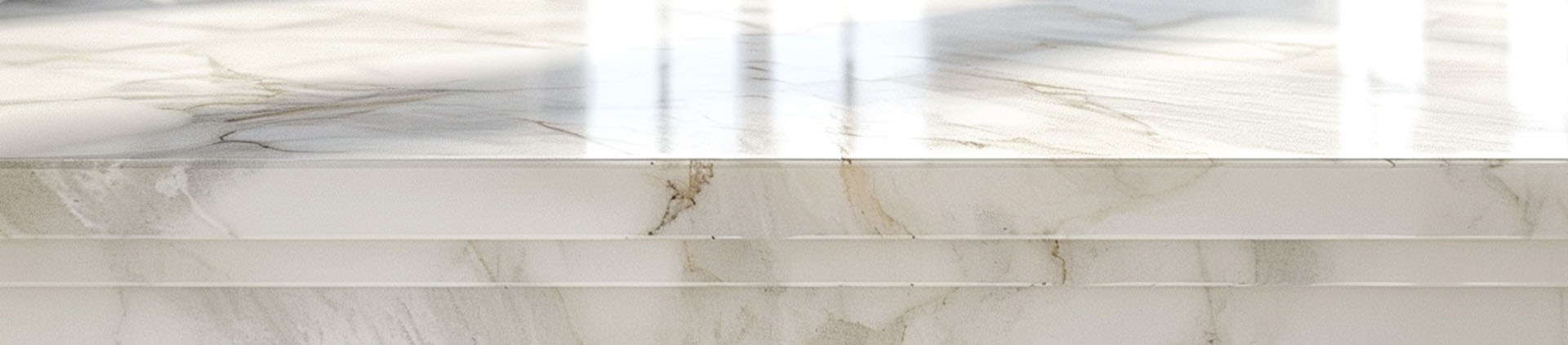
What Is Calacatta Quartz Countertop And Is It Durable?
What Is Calacatta Quartz Countertop And Is It Durable?
0%
Table of Contents
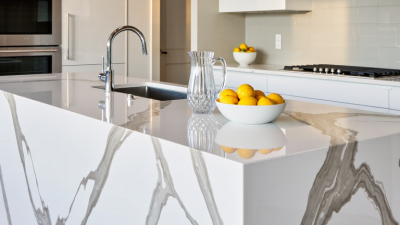
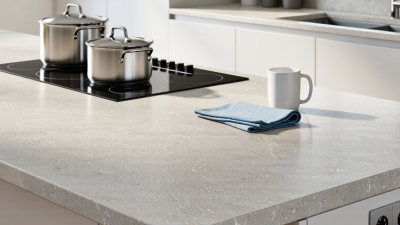
If you're considering Calacatta quartz, you probably love that marble-inspired look but don't want the upkeep of real marble. Good news—it gives you both: the beauty, plus the durability of engineered stone. With its white background, bold gray veining, and polished finish, it can turn a kitchen island into a bright centerpiece. But here's the thing: 'Calacatta' only refers to the pattern, not some official grade of material. You still need to pay attention to the quartz content, resin formula, slab thickness, and fabrication quality. Those details really make the difference.
Industry reports can be super helpful for context, but you gotta take them with a grain of salt. Take the Freedonia Group’s countertop research, for instance — they call engineered stone a major category in residential remodeling. Meanwhile, Grand View Research says the global quartz countertop market keeps growing, mostly because people want low-maintenance surfaces. The catch? These reports don’t all define the market the same way. So their numbers aren’t exactly apples-to-apples. That’s something worth paying attention to.
When you actually use quartz day to day, it’s pretty great because the surface is nonporous, so coffee, tomato sauce, cooking oil—those everyday messes don’t really stand a chance. Most manufacturers will tell you to just use mild soap and water, no need for sealers. But let’s be real, quartz isn’t bulletproof. Too much heat can mess with the resin, and if you drop something heavy right on the edge or near a sink cutout, you could chip it. That’s why the Natural Stone Institute keeps stressing proper fabrication, support, and installation—it really matters for how the countertop holds up. Honestly, you can't just rely on that showroom sample to know how a countertop will live with you. Sure, it looks gorgeous in the store. But a hot roasting pan still needs a trivet—no exceptions. And even your sharpest knife wants a cutting board. Oh, and seams? On bigger islands, especially with bold veining, they can stand out more than you'd expect. That's normal, not a flaw. With proper installation and just plain sensible care, a Calacatta Quartz countertop can hold up beautifully for years. But at the end of the day, it's your daily habits that really decide how long it lasts—not just how good it looks.

Table of Contents [Hide]
1 What Is Calacatta Quartz Countertop?
2 What Makes Calacatta Quartz Look Like Natural Marble?
3 How Is Calacatta Quartz Countertop Manufactured?
4 How Durable Is Calacatta Quartz for Everyday Use?
5 Is Calacatta Quartz Resistant to Stains, Heat, and Scratches?
6 How Should Calacatta Quartz Countertops Be Maintained?
What Is Calacatta Quartz Countertop?
Calacatta quartz is an engineered countertop surface designed to resemble Calacatta marble. It usually has a bright white background, broad gray veining, and occasional warm accents. The pattern is created with crushed quartz, mineral pigments, and polymer resin. According to technical guidance from the Natural Stone Institute, engineered stone commonly contains about 90% quartz minerals, although formulas vary by manufacturer. Quartz gives the slab its visual depth and hardness. Resin binds the particles into a dense, nonporous surface.
The name describes appearance, not a separate mineral type. That distinction matters when choosing a countertop. Natural Calacatta marble develops individual veining and may absorb liquids without regular sealing. Calacatta quartz offers more consistent pattern control and usually resists coffee, oil, and everyday spills. The U.S. Geological Survey identifies quartz as a mineral with Mohs hardness around 7, supporting its strong scratch resistance. It is durable, but not indestructible.
A hot pan can still damage the resin surface. Prolonged direct sunlight may also affect color over time. I would use a trivet near a cooktop and avoid abrasive powders. That sounds cautious, perhaps overly cautious. Yet countertop failures often begin with small habits. Professional fabrication guidance also stresses correct support around sinks, seams, and overhangs. A beautiful slab can crack when installation ignores those details.
What Makes Calacatta Quartz Look Like Natural Marble?
Calacatta quartz imitates the dramatic appearance of natural marble through carefully designed veining. Its bright white background creates a clean, spacious feeling. Gray or warm-gold veins cross the surface in irregular paths, much like mineral deposits formed underground. Some patterns are bold and sweeping. Others appear soft and cloudy.
That contrast matters. Natural marble has unpredictable movement, while quartz uses controlled printed or pigmented patterns. Manufacturers may layer several tones to create depth, then polish the slab to reflect light across the surface. In a kitchen, this effect becomes noticeable near a window, where subtle shadows make the veins appear less flat. Matte finishes can look more stone-like, although they may show fingerprints more easily.
From installation experience,
slab selection has a major effect on realism. Two slabs from the same collection can display different vein positions, so fabricators usually dry-lay them before cutting. Vein direction also matters around islands, sinks, and joins. Poor alignment can make an attractive pattern look artificial. This is easy to overlook.
Quartz is generally nonporous and resists common stains from coffee, oil, and tomato sauce. It does not require routine sealing like many marble surfaces. However, it is not indestructible. High heat, harsh chemicals, and heavy impact can damage the resin or edges. A hot pan still needs a trivet. The marble look is convincing, but it should not be mistaken for marble’s natural variation or heat tolerance.
How Is Calacatta Quartz Countertop Manufactured?
Calacatta quartz countertop is manufactured, not quarried as a single natural slab. Producers blend crushed quartz minerals, polymer resin, and stable pigments. Large presses compact this mixture under vibration and vacuum. The slabs then enter a curing oven, where heat hardens the resin. Surface polishing creates a smooth finish and reveals the veined pattern.
The quartz content commonly reaches about 90% by weight, according to technical guidance from the Natural Stone Institute. The remaining material controls color, bonding, and workability. Digital patterning can place gray or gold veins across the slab. However, no two slabs look perfectly identical. That variation is part of the appeal, and sometimes a problem during installation.
Factory inspection usually checks thickness, flatness, color, and surface defects. ANSI Z124.6 evaluates physical performance for quartz surfacing products, including stain resistance and dimensional stability. A 2024 U.S. Geological Survey mineral commodities report also recorded roughly 100 million metric tons of U.S. industrial sand and gravel production, showing the scale of mineral supply behind engineered surfaces. That figure does not represent countertop-grade quartz alone.
In practical use, cured quartz resists everyday stains and scratches better than many softer surfaces. It is not indestructible. Hot cookware, harsh chemicals, or poorly supported overhangs can cause damage. Fabricators still need accurate templates, reinforced cutouts, and careful edge polishing. Small manufacturing differences matter. The material looks uniform, but quality control is never perfect.
How Durable Is Calacatta Quartz for Everyday Use?
Calacatta quartz is an engineered surface designed to resemble dramatic Italian marble. Its pale background and flowing veins create a bright, refined kitchen appearance. For everyday use, it offers strong resistance to stains, moisture, and ordinary scratches. Its nonporous surface does not easily absorb coffee, cooking oil, or tomato sauce. However, it is not indestructible. Heavy impact can chip an edge, especially around sinks and cooktops. The decorative veining affects appearance, not basic strength.
In a busy kitchen, quartz usually handles chopping, baking, and frequent cleaning well. Still, placing a hot pan directly on the surface may cause thermal damage or discoloration. A trivet is a small habit with real value. Fine sand, grit, and unglazed ceramics can create dull marks over time. Seams may also become noticeable, depending on the slab pattern and installation quality. I have found that rushed cleaning often creates more frustration than normal cooking. Mild soap and a soft cloth are usually enough.
Tips: Use a cutting board, even though quartz resists scratches. Wipe spills before they dry. Keep heavy appliances on stable feet. Check the edge profile before installation, because sharper edges need more care. Avoid abrasive powders, harsh chemicals, and sudden heat. A countertop can be highly durable, but daily neglect still leaves evidence.
Is Calacatta Quartz Resistant to Stains, Heat, and Scratches?
Calacatta quartz is an engineered countertop with a marble-like white background and flowing gray veins. Its dense surface resists everyday spills better than many natural stones. Coffee, cooking oil, and tomato sauce usually remain on top instead of soaking in. Wipe them promptly with mild soap and a soft cloth. Usually, yes. However, “stain-resistant” does not mean stain-proof. Dried pigments, harsh chemicals, or neglected spills may leave dull marks, especially around seams and textured edges.
Heat requires more caution. Quartz tolerates normal contact with warm plates and cookware, but sudden, intense heat can damage its resin content. A hot pan placed directly on the counter may cause discoloration, cracking, or a thermal shock mark. Use a trivet every time. This habit feels excessive until a repair becomes necessary. Direct sunlight can also affect some surfaces over long periods, so window exposure deserves attention during planning.
Scratches are uncommon under ordinary food preparation because quartz is hard and durable. Still, ceramic cookware, rough stoneware, and dragged appliances can mark the surface. Cut on a board, not directly on the counter. Small scratches may be difficult to notice, while deep damage often needs professional assessment. Daily durability is strong, but careless use can defeat it. My practical view is slightly less romantic than showroom claims: the surface performs reliably when treated as a quality worktop, not as an indestructible slab.
What Is Calacatta Quartz Countertop and Is It Durable? Is Calacatta Quartz Resistant to Stains, Heat, and Scratches?
| Evaluation Dimension | Typical Characteristics | Resistance or Durability Level | Practical Guidance |
|---|---|---|---|
| Material Definition | Calacatta quartz is an engineered countertop material made primarily from quartz particles combined with resin and pigments. “Calacatta” generally describes a white background with bold gray or sometimes warm veining inspired by natural Calacatta marble. | Consistent | The Calacatta pattern affects appearance, not the basic performance of the quartz surface. |
| Porosity | The finished surface is nonporous, so it does not normally absorb liquids in the same way as natural stone with open pores. | Very High | It generally does not require routine sealing. Wipe spills promptly, especially strongly colored or acidic substances. |
| Stain Resistance | Quartz surfaces are highly resistant to common household stains from coffee, tea, wine, sauces, and cooking oils when cleaned promptly. | High | Stain resistance is not stain proof. Prolonged exposure to pigments, harsh chemicals, or dried spills can cause discoloration or surface damage. |
| Heat Resistance | The quartz mineral content tolerates normal kitchen conditions, but the resin binder can be damaged by intense or prolonged heat. | Moderate | Place hot pans, baking dishes, and slow cookers on trivets or heat pads. Avoid direct contact with high-temperature cookware. |
| Thermal Shock | Rapid temperature changes can create stress in the slab and may contribute to cracking, particularly near cutouts, seams, or unsupported areas. | Limited | Do not move extremely hot cookware directly onto the countertop or pour boiling liquid onto a cold surface. |
| Scratch Resistance | Quartz is harder than many common countertop materials and resists ordinary wear from plates, utensils, and routine food preparation. | High | Use a cutting board. Knives, abrasive powders, and gritty particles can still scratch or dull the surface. |
| Impact Resistance | The material is durable during normal use, but heavy impacts can chip edges or crack the slab, especially at sink openings and corners. | Moderate to High | Protect exposed edges and avoid dropping heavy cookware or standing on the countertop. |
| Moisture Resistance | The nonporous surface does not readily absorb water, making it suitable for kitchens, bathrooms, and other areas exposed to routine moisture. | High | Dry standing water around seams, faucets, and edges to help keep the installation clean and well maintained. |
| Chemical Resistance | Mild soap and water and many ordinary household cleaners are generally suitable. Strong solvents, abrasive cleaners, and highly alkaline products may damage the finish or resin. | Moderate | Follow the surface-care instructions supplied for the specific slab and avoid bleach mixtures, oven cleaners, paint removers, and abrasive scouring products. |
| Maintenance Requirements | Routine care normally consists of wiping the surface with a soft cloth, warm water, and a mild detergent. | Low Maintenance | Regular sealing, polishing, or waxing is generally unnecessary and may leave residue or affect the finish. |
| Sunlight and UV Exposure | Extended direct sunlight can contribute to fading or color changes in some engineered quartz surfaces because of the resin and pigments. | Variable | Use caution in outdoor applications or rooms with strong direct sunlight. Confirm the product’s UV suitability before installation. |
| Expected Service Life | When properly installed and maintained, a quartz countertop can remain functional and attractive for many years under normal residential use. | Long-Lasting | Service life depends on slab quality, support, fabrication, installation, heat exposure, cleaning habits, and impact protection. |
| Best Overall Use | Calacatta quartz is well suited to kitchen islands, bathroom vanities, backsplashes, and other interior surfaces where a marble-inspired appearance and low maintenance are desired. | Suitable | It is a strong everyday option, provided users protect it from direct heat, sharp blades, harsh chemicals, and heavy impacts. |
Overall assessment: Calacatta quartz is highly resistant to stains and everyday scratches, but it is not completely stain-proof, heat-proof, or scratch-proof. Using trivets, cutting boards, mild cleaners, and prompt spill removal will help preserve its appearance and performance.
How Should Calacatta Quartz Countertops Be Maintained?
Calacatta quartz countertops combine a marble-like appearance with an engineered quartz surface. They are generally durable, but they are not indestructible. Proper maintenance protects both the finish and the resin used during manufacturing.
Wipe daily with warm water, a soft cloth, and a small amount of pH-neutral dish soap. Dry the surface afterward to prevent dull water marks, especially around the sink. Remove coffee, wine, oil, and tomato sauce promptly. A gentle cleaner is usually enough. Avoid abrasive powders, rough scouring pads, and highly acidic chemicals. These products can weaken the surface finish over time.
Use a cutting board every time. Quartz resists ordinary scratches, but sharp knives can still leave marks. Place hot pans on a thick trivet instead of directly on the countertop. Sudden heat may damage the resin or create a crack. Check seams and edges occasionally for lifting, chips, or unusual discoloration. Do not try to repair serious damage with household glue. A qualified countertop professional should assess it.
Over-cleaning can also cause problems. More product does not mean more protection. Some homeowners forget the underside of a small overhang, where dust and moisture collect. That detail matters. With gentle cleaning and sensible heat protection, the countertop can remain attractive for many years, although careless use may still leave permanent damage.
FAQS
What is Calacatta quartz countertop?
It is an engineered surface made from crushed quartz, mineral pigments, and polymer resin. It resembles white marble with broad gray veins and occasional warm accents. The name describes appearance, not a separate mineral type.
Is Calacatta quartz natural marble?
No, it is manufactured rather than quarried as a solid marble slab. Its pattern is more predictable and consistent. Natural marble may absorb liquids without regular sealing. That difference matters during selection.
How durable is Calacatta quartz for daily kitchen use?
It handles chopping, baking, moisture, and frequent cleaning well. Its dense surface resists ordinary scratches and everyday stains. However, heavy impacts can chip exposed edges. Especially near sinks.
Does Calacatta quartz resist coffee, oil, and tomato sauce?
Usually, yes. Its nonporous surface keeps many spills near the surface. Wipe coffee, oil, and tomato sauce with mild soap and a soft cloth. Dried pigments or neglected spills may still leave dull marks. Stain-resistant is not stain-proof.
Can hot pans damage Calacatta quartz?
Yes. Direct heat can discolor or crack the resin surface. Use a trivet beneath hot pans, baking trays, and cookware. It may feel overly cautious. Repairs feel worse.
Can Calacatta quartz scratch?
Ordinary food preparation rarely causes scratches because quartz is hard. Rough ceramics, dragged appliances, and gritty sand can create dull marks. Use a cutting board instead of cutting directly on the countertop. Small damage can hide easily.
How should Calacatta quartz be cleaned?
Use mild soap, warm water, and a soft cloth for routine cleaning. Wipe spills before they dry, especially around seams and textured edges. Avoid abrasive powders and harsh chemicals. Simple care works.
What installation details affect Calacatta quartz performance?
Correct support matters around sinks, seams, and overhangs. Poor support can cause cracking, even when the slab looks strong. Inspect the edge profile before installation. Sharper edges need more care.
Can sunlight affect Calacatta quartz?
Prolonged direct sunlight may change the color of some surfaces over time. Consider strong window exposure during kitchen planning. The effect varies by formulation and installation conditions. I would not ignore it.
Conclusion
Calacatta Quartz Countertop is an engineered surface designed to capture the elegant appearance of natural Calacatta marble while offering greater consistency and easier care. Its bright background, flowing gray veining, and carefully controlled patterns are created by combining natural quartz minerals with resins and color pigments. During manufacturing, the materials are blended, pressed under high pressure, cured, and finished to produce a dense, smooth slab with a refined stone-like appearance.
For everyday use, Calacatta quartz is highly durable, nonporous, and resistant to common stains, moisture, and surface scratches. It is well suited to kitchens and bathrooms, although it should still be protected from direct contact with very hot cookware, sharp tools, and strong chemicals. Routine maintenance is simple: wipe spills promptly with a soft cloth and mild soap, avoid abrasive cleaners, and use cutting boards and heat pads when needed. With reasonable care, this countertop can retain its beauty, functionality, and polished finish for many years.
Related Posts

Best Calacatta Quartz Countertops for Your Home Design Ideas?

China Best Artificial Quartz Slab Trends and Innovations in 2026?

China Best White Crystal Nano Glass Stone for Global Buyers?

2026 Best Artificial Stone Factory Innovations and Trends in Design?

Why Choose Quartz Slab for Global Projects?

Top 5 Tips for Sourcing Quality Artificial Stone Products?
Blog Tags:
Updated:

Isabella
Isabella is a dedicated marketing professional at a leading artificial stone enterprise established in 2016. With a deep understanding of the industry, she excels in showcasing the company’s innovative products and services. Isabella is passionate about research and development, playing a vital......
 What Is Calacatta Quartz Countertop And Is It Durable?
 What Are the Top 10 Taj Mahal Quartz Stone Types?
 7 Best Artificial Quartz Slab Suppliers Worldwide?
 Why Choose Sintered Stone Countertops?