
Top Sintered Stone Countertop Manufacturers Worldwide
Top Sintered Stone Countertop Manufacturers Worldwide
0%
Table of Contents
Sintered stone countertops have really made their way from fancy showrooms into everyday kitchens, bustling hospitality spots, and even outdoor projects. Honestly, their appeal is pretty obvious—big slabs, sharp edges, and surfaces built to handle whatever daily life throws at them. But, I gotta say, a shiny display only tells part of the story. Things like consistent slabs, skilled fabrication, good installation support, and clear warranty terms are just as important.
Just so you know, the quote I’m sharing below isn’t from a real industry pro—it’s an editorial line I put together. But I think it hits the mark: “A slab really shows its worth at the edges, around the cutouts, and after a year or so of daily use.” This kind of real-world test helps keep claims realistic. It also sheds light on a pretty common blind spot— even the toughest materials can fail if the details are rushed or overlooked.
In this guide, I’ve taken a look at some of the top brands around the world—like Cosentino, Neolith, Laminam, Inalco, and Lapitec. I’ll cover their design options, technical info, distribution, how they support fabricators, and what you get after buying. Keep in mind, these details can change depending on where you’re located or what specific product line you’re eyeing. Always double-check the latest specs with the manufacturer before pulling the trigger. Sure, samples are helpful, but they don’t show every little variation you’ll see across a whole slab. So, it’s worth inspecting the actual material in person, making sure you understand the edge and cutout requirements, and chatting with a pro about installation conditions. Remember, the comparison chart that follows is just a starting point—it’s not a full-on review tailored to your specific project.

Table of Contents [Hide]
1 Understanding Sintered Stone Countertops and Their Uses
2 How Sintered Stone Countertops Are Manufactured
3 Criteria for Assessing Sintered Stone Manufacturers
4 Leading Sintered Stone Countertop Manufacturers Worldwide
5 Regional Strengths in Global Sintered Stone Production
6 How to Compare Manufacturers and Choose a Supplier
Understanding Sintered Stone Countertops and Their Uses
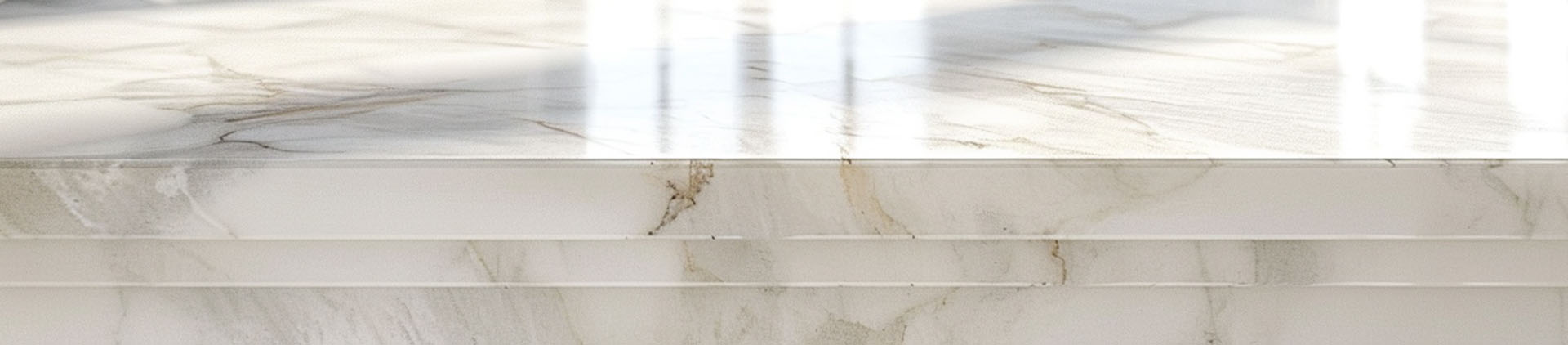
Sintered stone is made by compacting mineral powders and firing them at high temperatures. The process creates a dense slab for kitchen counters, bathroom vanities, wall cladding, and outdoor kitchens. It is not the same as engineered quartz, which uses resin binders. That distinction matters. In the 2024 Houzz U.S. Kitchen Trends Study, 42% of renovating homeowners selected quartz for countertops, showing strong demand for engineered surfaces, though the figure does not measure sintered stone specifically.
For daily use, sintered stone resists many stains and tolerates heat better than some resin-based surfaces. Still, performance varies by product and installation. A hot pan, a sharp impact near an edge, or a poorly supported overhang can cause damage. Ask for the manufacturer’s technical sheet, test methods, and care instructions. For porcelain-like surfaces, ISO 10545-3 measures water absorption; the result helps compare products, but does not predict every countertop condition.
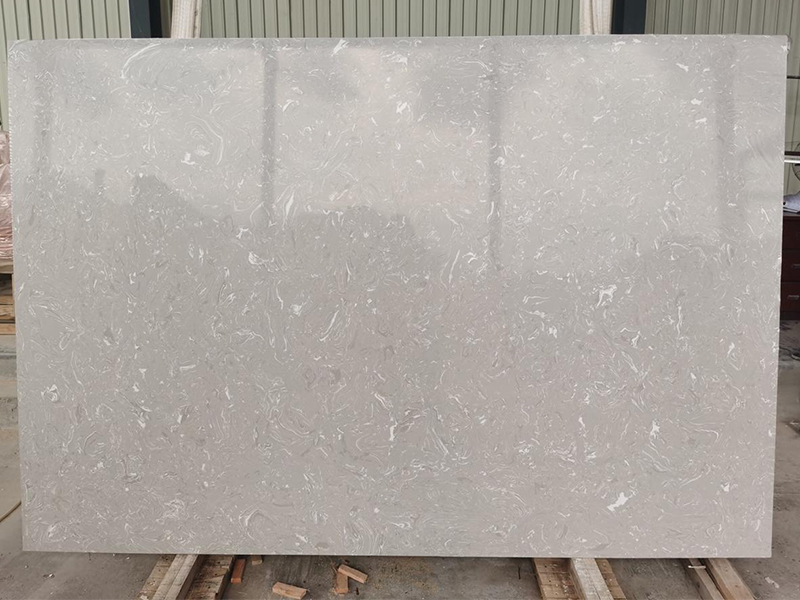
Look closely at a full slab, not just a small sample. Veining and color can shift across large areas, and seams may remain visible. Fabrication quality matters. Cutouts around sinks and cooktops need careful support and finishing. One practical caution: “low maintenance” does not mean maintenance-free. Clean spills promptly and confirm which cleaners are suitable before installation.
Common Sintered Stone Slab Thicknesses
Sintered stone is available in a range of nominal thicknesses. Thinner slabs are often used for wall cladding and furniture surfaces, while 12 mm and 20 mm options are commonly used for countertops. Availability and recommended applications vary by product.
How Sintered Stone Countertops Are Manufactured
Sintered stone starts with carefully selected mineral powders, often including feldspar, silica, and clay. Manufacturers mill and blend these materials, then press them into large slabs under intense pressure. Drying removes moisture before the slabs enter a kiln. Some lines add pigments or surface textures before firing, creating veining that runs across the surface rather than sitting only on top.
Heat changes the compacted minerals into a dense, stone-like material. The European Commission Joint Research Centre’s 2007 Best Available Techniques reference document for ceramic manufacturing reports firing temperatures of roughly 1,050–1,200°C for many wall and floor tiles. This is useful context, not a universal sintered-stone recipe; kiln settings vary with composition, thickness, and production line. Small defects matter. After cooling, slabs are inspected, calibrated, and cut, then their edges may be polished. A hairline flaw can appear only after cutting. That is one reason quality checks should cover both the full slab and finished edges. The process looks controlled, yet mineral batches and kiln conditions can still produce uneven color or slight warping. Manufacturers need to monitor both closely.
Criteria for Assessing Sintered Stone Manufacturers
Assessing a sintered stone manufacturer takes more than comparing colors and quoted prices. Request technical data for water absorption, flexural strength, thermal resistance, and surface durability. Then check whether the figures come from recognized, independent testing or internal measurements. A glossy sample can look convincing under showroom lights, but a countertop also faces hot pans, spills, and repeated cleaning. Ask for a larger sample and inspect its edges, finish, and color consistency in daylight.
Production control matters just as much. Ask how batches are tracked and how defects are handled before shipment. Reliable manufacturers should explain slab dimensions, thickness tolerances, packaging, and recommended fabrication methods in clear terms. Look for installation guidance and responsive technical support, not just attractive product photography. If possible, review a recent project or speak with a fabricator who has worked with the material. Details count.
Some comparisons remain imperfect. Test results may use different methods, and a small sample cannot predict every slab’s behavior. A manufacturer that acknowledges these limits may be more credible than one promising flawless performance. Also consider lead times, replacement policies, and the consistency of written specifications. The best assessment combines documents, physical inspection, and candid questions. A few extra checks can prevent expensive surprises later.
Leading Sintered Stone Countertop Manufacturers Worldwide
Leading sintered stone countertop manufacturers combine mineral selection, controlled pressing, and high-temperature firing. Their production teams monitor slab thickness, flatness, and surface consistency across batches. Buyers should request technical data, sample pieces, and clear descriptions of inspection procedures. Details matter.
A polished sample can look flawless under showroom lights, yet reveal color variation beside a window. Compare samples in the intended room, and ask how the manufacturer manages shade differences between production lots. Experienced suppliers can explain cutting tolerances, edge options, and suitable installation methods without making vague promises. That takes discipline.
Worldwide manufacturers may offer varied slab sizes, finishes, and project support, but capacity alone does not prove reliability. Check whether packaging protects corners during transit and whether replacement procedures are documented. Ask for test information relevant to stain resistance, heat exposure, and surface wear. Results depend on the product and conditions, so avoid treating one test as a guarantee. Even a well-run factory can have occasional inconsistencies; transparent quality records make those issues easier to assess. Compare response times, documentation, and sample-to-order consistency before choosing a production partner.
Regional Strengths in Global Sintered Stone Production
Regional strengths in sintered stone production reflect different industrial histories. China benefits from large manufacturing clusters, established equipment supply chains, and access to major export ports. These conditions can support high output and varied slab formats. Scale matters. Buyers should still check consistency between batches, especially when ordering several container loads.
Italy and Spain draw on long experience in ceramics, surface design, and kiln-based production. Their manufacturers often focus on refined finishes, technical development, and close control of appearance. In practice, a polished sample may not reveal how a full production run will look under different lighting. Requesting batch records and inspecting representative slabs can reduce that gap. It is an unglamorous step, but useful.
Turkey and India are also building stronger positions through manufacturing investment and access to regional markets. Their capabilities vary widely by plant, so a country label alone says little about a supplier’s performance. Ask about slab thickness tolerances, edge behavior after cutting, and packaging for long-distance transport. Not everywhere. A factory can have modern presses and still face delays when raw material supply or energy costs shift. Regional strengths matter, but dependable results come down to the specific production line and its quality checks.
How to Compare Manufacturers and Choose a Supplier
Compare manufacturers by documented performance, not showroom lighting. Ask for technical data on water absorption, flexural strength, thickness tolerance, and test methods. A supplier should explain how each result relates to everyday use. Ask where quality checks happen, from pressing and firing to final inspection. Request a recent production sample. Inspect the edges. Check whether its thickness and finish match the specification, not just the color.
Consistency matters across full slabs. Vein patterns and shade can shift between batches, so ask how orders are matched and whether you can approve slab images before dispatch. Discuss packaging, expected lead time, installation guidance, and the process for handling chipped or mismatched pieces. Read warranty terms carefully; confirm what they cover and which conditions may void coverage. A polished brochure cannot answer those questions.
Compare the full delivered cost, including crating, freight, and replacement arrangements, rather than choosing on unit price alone. Ask for references from projects with similar slab sizes and uses, then verify how the material performed after installation. I would not treat one sample as proof of long-term consistency; it is only a useful first check. Keep written answers and compare them against the physical sample under natural and indoor light. Even careful screening can miss a production variation, so clarify what happens if the delivered batch differs from the approved one.
FAQS
What is sintered stone made from?
It starts with mineral powders, often including feldspar, silica, and clay. The mixture is pressed, dried, and fired into dense slabs.
How is it different from engineered quartz?
Sintered stone is formed from compacted minerals. Engineered quartz uses resin binders, so their heat response and care needs can differ.
Where can sintered stone be used?
Common uses include kitchen counters, bathroom vanities, wall cladding, and outdoor kitchens. Confirm that the specific product suits its planned location.
Does sintered stone resist heat and stains?
It resists many stains and may tolerate heat better than some resin-based surfaces. Performance varies by product and installation. Not invincible.
What can damage a countertop?
A sharp impact near an edge can cause damage. So can an unsupported overhang or a poorly finished sink cutout.
How should I compare product samples?
Inspect a large slab in daylight, not only a small showroom sample. Veining and color may shift across the surface, and seams can remain visible.
What technical information should I request?
Ask for test data on water absorption, flexural strength, thermal resistance, and surface durability. Check the test methods and care instructions, too.
What should I check before installation?
Review slab dimensions, thickness tolerances, edge finishing, packaging, and fabrication guidance. Ask how defects are handled and what replacement options exist.
Is sintered stone maintenance-free?
No. Clean spills promptly and confirm which cleaners are suitable. “Low maintenance” still needs a little attention.
Conclusion
Sintered Stone Countertops are engineered surfaces valued for their durability, low porosity, and versatility in kitchens, bathrooms, and other interior or exterior spaces. This article explains how mineral materials are combined and processed under intense heat and pressure to create a dense slab, then outlines the qualities buyers can use to assess manufacturers, including production consistency, material performance, design options, technical support, and quality control.
It also surveys the global manufacturing landscape without focusing on individual brands, highlighting how regional resources, technology, and expertise shape production strengths. To compare suppliers, readers should consider product specifications, available finishes and sizes, testing information, lead times, logistics, warranty terms, and after-sales service. Evaluating these factors against the project’s practical needs can help buyers choose a dependable supplier and select a countertop suited to its intended use.
Related Posts

How to Source High Quality Artificial Onyx for Your Business?

7 Tips for Choosing Taj Mahal Quartz Stone?

Top Benefits of Artificial Onyx for Home Decor and Jewelry Design?

2026 Best Engineered Stone Trends for Global Buyers?

2026 Best Artificial Stone Factory Innovations and Trends in Design?

Top Engineered Quartz Vanity Tops in China for Global Buyers?
Blog Tags:
Updated:

Sophia
Sophia is a professional marketer at Xiamen Yinxiang Artificial Marble Co., Ltd., a leading enterprise in the artificial stone industry since its establishment in 2016. With a deep understanding of the company's innovative products, she excels in conveying their unique features and benefits to a......
Previous How to Buy Artificial Stone From Global Suppliers?
 What Did the 24th Shuitou Stone Expo Signal for 2026 Global Stone Sourcing?
 2026 How to Choose Sintered Stone for Global Projects?
 Top Sintered Stone Countertop Manufacturers Worldwide
 China's Five Stone Export Markets in 2026: Korea, ASEAN, the Middle East, the EU, and the US — Ranked