
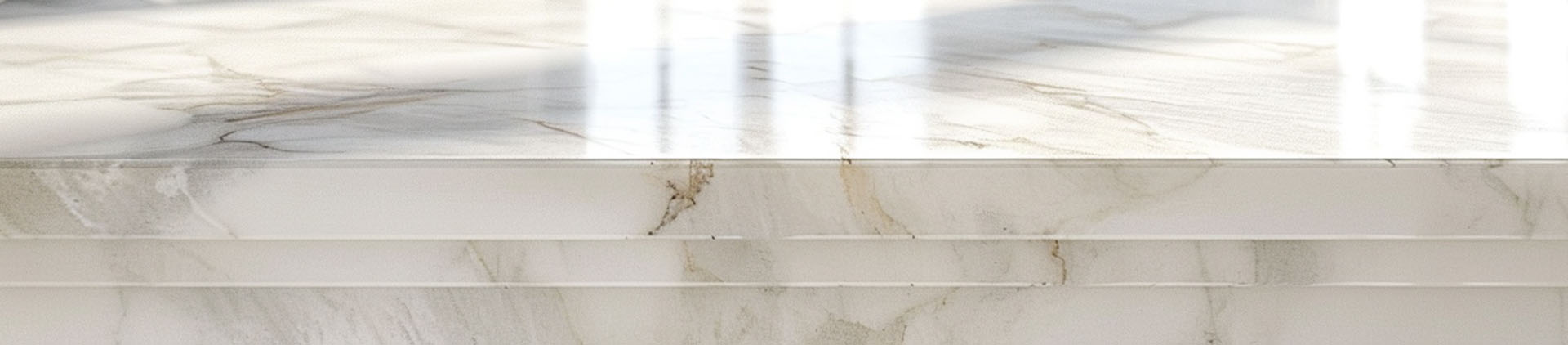
2026 How to Choose Sintered Stone for Global Projects?
2026 How to Choose Sintered Stone for Global Projects?
0%
Table of Contents
Define Sintered Stone: 1,200°C+ Firing and ≤0.5% Water Absorption
Verify Quality: ISO 13006, EN 14411, ASTM C373, and ISO 10545 Tests
Compare Performance: ≥35 MPa Flexural Strength and Slip-Rating Needs
Match Formats: 6–20 mm Thickness, Panel Size, Weight, and Edge Limits
Engineer Installation: ≥95% Exterior Adhesive Coverage and Movement Joints
Audit Sustainability: EPDs, ISO 14025, Recycled Content, and Carbon Data
Secure Global Supply: Batch Tolerances, Packaging, Incoterms, and 2026 Codes
Choosing Sintered Stone for global projects in 2026 isn't just about comparing colors, prices, or showroom samples. You really need to consider how the material performs in different climates, installation methods, local regulations, and what kind of long-term maintenance it’ll need. For example, a light-colored slab might look stunning under the bright, European showroom lights, but on a dusty, windy outdoor site, it might quickly gather dirt. On the flip side, a darker surface could hold up well outside, but it requires much more careful handling during transportation and installation to avoid damage.
Industry reports can give you a good starting point, but they shouldn’t replace actual on-site verification. The UN’s 2023 Global Status Report for Buildings and Construction highlights that buildings still account for around 37% of global energy-related emissions. That’s a strong reminder that we need durable materials with long-lasting performance, ideally made with responsible production practices. Meanwhile, market analysts like Grand View Research keep pointing out steady growth in ceramic surfaces, porcelain slabs, and engineered stones. Just keep in mind, some reports lump Sintered Stone together with porcelain or ceramic slabs, so direct comparisons aren’t always 100% accurate.
When making your decision, rely on solid technical data. Look into factors like water absorption, flexural strength, resistance to scratching, thermal shock, UV stability, and slip resistance. It’s also a good idea to check that test methods meet standards like EN 14411, ISO 13006, ASTM C373, and ASTM C1026 where applicable. Don’t forget to ask manufacturers—whether it’s Cosentino, Laminam, Neolith, or Dekton—for batch records, independent testing reports, environmental declarations, and detailed installation instructions.
And pay attention to the little things. Make sure the crate protections are adequate, specify edge tolerances, use approved adhesives, and hire experienced fabricators. Sometimes, one overlooked joint or small detail can ruin what would otherwise be an amazing facade. No report can predict every site condition you might encounter, so choosing the best material involves combining verified data, local expertise, and a bit of honest reevaluation before giving the final thumbs up.

Table of Contents [Hide]
1 Define Sintered Stone: 1,200°C+ Firing and ≤0.5% Water Absorption
2 Verify Quality: ISO 13006, EN 14411, ASTM C373, and ISO 10545 Tests
3 Compare Performance: ≥35 MPa Flexural Strength and Slip-Rating Needs
4 Match Formats: 6–20 mm Thickness, Panel Size, Weight, and Edge Limits
5 Engineer Installation: ≥95% Exterior Adhesive Coverage and Movement Joints
6 Audit Sustainability: EPDs, ISO 14025, Recycled Content, and Carbon Data
7 Secure Global Supply: Batch Tolerances, Packaging, Incoterms, and 2026 Codes
Define Sintered Stone: 1,200°C+ Firing and ≤0.5% Water Absorption
Sintered stone is an engineered surface made from selected minerals, compacted under high pressure, and fired above 1,200°C. This intense process creates a dense, ceramic-like material with water absorption of 0.5% or less. That matters in kitchens, hotel bathrooms, façades, and public spaces exposed to rain or frequent cleaning.
Low absorption helps limit staining, but it does not make every installation maintenance-free. Coffee, oil, and colored chemicals can still mark a damaged or poorly finished surface. Ask for independent test reports, the exact absorption result, and the testing standard used. Do not rely only on a sales specification. Measure it.
For global projects, I would compare slab thickness, thermal movement, surface texture, edge strength, and cutting performance. A large façade panel may need a different engineering solution from a kitchen worktop. Site teams should inspect pallets for warping, chipped corners, and shade variation before installation. Not every slab behaves identically. Local climate also matters: freeze-thaw cycles, intense sunlight, coastal salt, and sudden temperature changes can influence detailing and fixing systems.
A practical selection should connect laboratory data with field experience. Request installation guidance for the intended application, especially around joints, openings, and unsupported spans. Some project decisions look efficient on paper but create waste during cutting. That is worth reconsidering. Reliable documentation, trained installers, and sample approval can reduce surprises across borders.
Verify Quality: ISO 13006, EN 14411, ASTM C373, and ISO 10545 Tests
2026 How to Choose Sintered Stone for Global Projects?
For global projects, appearance is only the opening test. A large 1600 × 3200 mm panel may look perfect under showroom lighting, yet fail during cutting or transport. I have learned to verify the product category before comparing certificates. ISO 13006 and EN 14411 define ceramic tile classifications, requirements, and test references. Some sintered stone products may fit these frameworks, but not automatically. Ask the supplier to state the applicable classification in writing.
Request current reports from a competent, independent laboratory. ASTM C373 measures water absorption and bulk density, which matter near wet loading docks, kitchens, and bathrooms. The ISO 10545 series covers practical properties, including dimensions, water absorption, breaking strength, and surface resistance. Check the exact part numbers, test methods, sample thickness, and production batch. One impressive report is not enough.
Look for traceability.
Match test conditions to the project. A countertop, ventilated façade, and airport floor face different stresses. Confirm slip performance separately when required; water absorption alone cannot predict safe walking. Compare at least three batches, not only a hand-sized sample. Shade variation, edge chipping, and warpage can appear later. I once trusted a clean sample too quickly. That decision needed correction. Certificates can be genuine and still be incomplete for your application. Ask for retesting when the formulation, thickness, finish, or factory changes.
Compare Performance: ≥35 MPa Flexural Strength and Slip-Rating Needs
For global projects, sintered stone selection should begin with real loading conditions, not appearance. A flexural strength of at least 35 MPa offers a useful performance benchmark. It can support demanding applications when thickness, span, and installation are properly matched. Strength alone is not enough.
I review technical data, test methods, slab thickness, and support spacing before approval. A large lobby floor may face rolling loads, point pressure, and repeated foot traffic. A ventilated façade needs different checks, including fixing design and wind exposure. Ask for independent laboratory reports and production-batch consistency. Do not rely on one attractive sample.
Slip performance needs equal attention. Wet entrances, pool surrounds, kitchens, and outdoor ramps require suitable slip ratings for their expected use. The rating may change with water, dust, footwear, or cleaning residue. Small surface details matter. A textured finish can improve grip but may hold dirt and complicate maintenance. I have seen specifications choose a high slip value while ignoring drainage and slope. That decision needs reconsideration. Test representative pieces under realistic wet and dry conditions, then confirm local project requirements before installation.
Match Formats: 6–20 mm Thickness, Panel Size, Weight, and Edge Limits
2026 How to Choose Sintered Stone for Global Projects?
Sintered stone selection starts with the installation system, not appearance. Thickness usually ranges from 6 to 20 mm. A 6 mm panel can suit lightweight wall cladding, if the backing and fixing method are approved. Twelve mm offers more stiffness for counters and furniture surfaces. Twenty mm may serve heavy-duty floors or outdoor applications, but the support design remains critical.
Panel size changes weight, handling, and breakage risk. A large 1600 × 3200 mm panel can weigh more than two workers should lift manually. Calculate weight before ordering: area multiplied by material density gives a realistic planning figure. Confirm openings, corners, and maximum cutting dimensions with the fabricator. Edge limits matter. Narrow strips, internal corners, and sink cutouts need sufficient remaining material. Small details cause expensive failures.
Tips: Prepare a format schedule for every room. Record thickness, panel size, estimated weight, edge finish, and lifting equipment. Request test data for flexural strength, water absorption, and thermal resistance. Check local structural requirements before production. Site conditions often differ from drawings. I have seen a perfect panel fail because a doorway was too narrow. That mistake was avoidable. Leave practical tolerance for transport, imperfect walls, and human handling. No spreadsheet replaces a site mock-up.
Engineer Installation: ≥95% Exterior Adhesive Coverage and Movement Joints
2026 How to Choose Sintered Stone for Global Projects?
For exterior projects, sintered stone succeeds through installation discipline, not appearance alone. ANSI A108 guidance and the TCNA Handbook recommend at least 95% mortar coverage for exterior tile assemblies. This requirement matters because empty spaces can collect water, freeze, and create stress behind large panels. During site inspections, installers should lift test pieces regularly. Check the back, corners, and panel edges. Coverage must be continuous, with no hollow zones near exposed joints.
Movement joints are equally important. ASTM C920 classifies suitable sealants by movement capability, while EJ171 guidance recommends planned joints at changes in plane, perimeters, and structural transitions. Joint spacing depends on climate, panel dimensions, substrate movement, and sunlight exposure. A long façade without interruption may look cleaner, but it can transfer cracks into the finish. I have seen well-cut panels fail because the substrate moved. The mistake was not the material. It was the system design.
Tips: Specify exterior-rated adhesive and confirm compatibility through project testing. Record coverage results with photographs. Keep joints open and clean before sealant application. Never assume a smooth substrate is stable. ISO 13006 and related tile standards support controlled product classification, but field workmanship still decides performance. A 95% target is not a guarantee. It is a minimum discipline that needs inspection, documentation, and occasional reconsideration when local conditions differ.
Audit Sustainability: EPDs, ISO 14025, Recycled Content, and Carbon Data
2026 How to Choose Sintered Stone for Global Projects?
Sustainability claims need evidence, not attractive percentages. On project audits, I check the Environmental Product Declaration before reviewing a supplier’s brochure. An EPD should follow ISO 14025 and the relevant product category rules. It should also come from an independent verification process. Check the declared unit, system boundaries, and lifecycle stages. Otherwise, carbon figures may look precise but remain difficult to compare.
Tips: Request the EPD in its original file. Confirm its validity date, PCR reference, and verification statement. Ask whether transport, packaging, installation, and end-of-life stages are included. Keep these details beside the project specification. Small omissions can affect procurement decisions. Very quickly.
Recycled content deserves the same scrutiny. Ask whether the percentage is pre-consumer, post-consumer, or a combined figure. Request supporting records, such as controlled production data or chain-of-custody documents. A high recycled percentage may still have limited climate value if manufacturing energy is intensive. Compare the product carbon footprint using identical units and boundaries. Renewable electricity claims also need dated, location-specific evidence. My own review process is not perfect; supplier data can change between design and delivery. Therefore, I record assumptions and revisit them before approval. That extra check often exposes missing transport data or outdated declarations.
Secure Global Supply: Batch Tolerances, Packaging, Incoterms, and 2026 Codes
2026 How to Choose Sintered Stone for Global Projects?
Secure global supply starts with measurable batch control. Request approved reference panels, production samples, and retained samples from every batch. Confirm thickness, length, flatness, shade, veining, and water absorption through agreed test methods, such as ISO 10545 where applicable. Do not assume “same color” means identical appearance. Natural-looking patterns can shift between pallets. A written tolerance matrix protects both parties.
Packaging needs equal attention. Use reinforced A-frames, edge guards, moisture-resistant wrapping, and visible pallet labels. Record crate dimensions, gross weight, slab count, and lifting points. UNCTAD reports that more than 80% of global merchandise trade by volume moves by sea. A small packing weakness can become a major site delay. I would not promise zero breakage. Instead, define inspection timing, photo evidence, replacement procedures, and spare quantities before shipment.
Tips: Match the delivery term to your control level. Under Incoterms 2020, clarify insurance, unloading, customs responsibility, and risk transfer. For 2026 projects, check the latest local building, fire, façade, slip-resistance, and structural codes. The International Code Council updates model codes on a recurring cycle, but adoption differs by jurisdiction. Ask for current certificates, not old marketing sheets. Build a landed-cost comparison, including port storage and inland handling. The World Bank’s 2023 Logistics Performance Index also shows why route reliability deserves attention, not only freight price. Small omissions remain possible. Review them openly before signing.
FAQS
Why should the product category be verified before comparing certificates?
Classification requirements differ between ceramic tiles and sintered stone. A product may fit a framework, but not automatically. Ask for the applicable classification in writing. Do not assume.
Which test information should be requested from a supplier?
Request current reports from a competent, independent laboratory. Check test methods, sample thickness, production batch, and exact standard parts. One attractive report is insufficient. Traceability matters.
What does water absorption testing reveal?
Water absorption and bulk density help assess performance near kitchens, bathrooms, and wet loading docks. They do not predict every installation risk. Slip performance requires separate testing.
Is a flexural strength of 35 MPa enough for every project?
A minimum value of 35 MPa offers a useful reference point. Thickness, span, support spacing, and loading conditions still matter. Strength alone is not enough.
How should slip performance be evaluated?
Test representative pieces in realistic wet and dry conditions. Consider water, dust, footwear, cleaning residue, drainage, and slope. Textured surfaces may improve grip but collect dirt.
Why should several production batches be compared?
Compare at least three batches, not only a hand-sized sample. Later batches may show shade variation, edge chipping, or warpage. Appearance can change after approval.
What exterior installation coverage is recommended?
Exterior assemblies should target at least 95% adhesive or mortar coverage. Inspect backs, corners, and edges by lifting test pieces. Empty zones can collect water and create stress.
Why are movement joints important for large exterior panels?
Joints help accommodate substrate movement, sunlight, climate, and structural transitions. Plan them at perimeters, changes in plane, and transitions. A long uninterrupted façade may transfer cracks into the finish.
Can genuine certificates guarantee project performance?
No. Certificates may be genuine yet incomplete for the application. Retesting may be needed after changes in formulation, thickness, finish, or factory. I once trusted a clean sample too quickly. That decision needed correction.
Conclusion
Choosing Sintered Stone for global projects requires a structured evaluation of material quality, performance, installation, sustainability, and supply reliability. The material should be produced through firing above 1,200°C and demonstrate water absorption of no more than 0.5%. Buyers should request documentation for ISO 13006, EN 14411, ASTM C373, and ISO 10545 testing, while confirming flexural strength of at least 35 MPa and selecting suitable slip ratings for each application.
Project teams must also match thicknesses from 6 to 20 mm with panel dimensions, handling weight, and edge limitations. For installation, exterior applications should target at least 95% adhesive coverage and include properly designed movement joints. Sustainability reviews should cover EPDs, ISO 14025 verification, recycled content, and transparent carbon data. Finally, global procurement should define batch tolerances, protective packaging, Incoterms, delivery controls, and compliance with applicable 2026 building requirements to reduce technical, logistical, and regulatory risks.
Related Posts

What is Sintered Stone Countertops and How Do They Work?

Why Choose Sintered Stone Countertops for Your Home Renovation?

Top 5 Zero Silica Quartz Stone Slabs Buyers Guide?

Top 10 Benefits of Using Artificial Marble Blocks for Your Projects?

How to Procure Artificial Marble in 2026 for Your Business?

How to Choose the Best Engineered Quartz Countertop for Your Kitchen?
Blog Tags:
Updated:

Olivia
Olivia is a dedicated marketing professional at Xiamen Yinxiang Artificial Marble Co., Ltd., a dynamic enterprise established in 2016 that specializes in artificial stone solutions. With a deep understanding of the industry and its nuances, Olivia excels in promoting the company's innovative......
Previous Top Sintered Stone Countertop Manufacturers Worldwide
 What Did the 24th Shuitou Stone Expo Signal for 2026 Global Stone Sourcing?
 2026 How to Choose Sintered Stone for Global Projects?
 Top Sintered Stone Countertop Manufacturers Worldwide
 China's Five Stone Export Markets in 2026: Korea, ASEAN, the Middle East, the EU, and the US — Ranked