
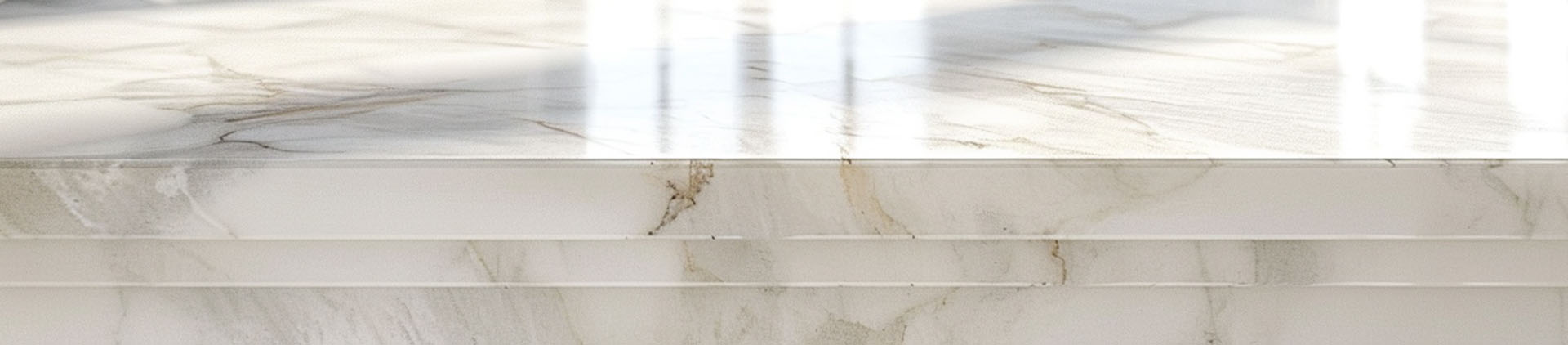
China's Five Stone Export Markets in 2026: Korea, ASEAN, the Middle East, the EU, and the US — Ranked
TL;DR — The Five Markets at a Glance
Korea remains China's single largest stone export market at 2.21 billion RMB in 2025, but it grew only 9.8% — a mature, spec-driven base rather than a growth engine.
The Middle East grew 83.8%, the EU 46.4%, and ASEAN 22.6%, making three markets outpace Korea's steady pace and reshaping where 2026 volume will come from.
The US reached 2.88 billion RMB with 12.3% growth, the most certification-conscious market and the one where a single failed ANSI/NSF test can block an entire container.
Access standards diverge sharply — KC Mark (Korea), SNI/TISI (ASEAN varies), SASO + SGS (Gulf), CE + EN 14617 (EU), and ANSI A137.1 + NSF/ANSI 61 (US) — so a one-size certificate does not exist.
Grey-series marble and large-format quartz are the safest cross-market material bets, but each market has a distinct category preference that changes the optimal product mix.
China's stone exports in 2026 are no longer a single-story Korea-and-US tale; they are a five-market portfolio in which Korea still leads on value at 2.21 billion RMB but the Middle East, the EU, and ASEAN are growing far faster. Because Korea's 9.8% growth reflects a mature, spec-locked market while the Middle East's 83.8%, the EU's 46.4%, and ASEAN's 22.6% reflect catch-up construction demand, a buyer who concentrates 2026 sourcing on last year's volumes will miss where the actual momentum — and the best negotiated terms — now sit. The five markets also diverge on access standards: Korea runs on the KC Mark and Korean lab accreditation, ASEAN fragments across SNI (Indonesia), TISI (Thailand), and other national marks, the Gulf demands SASO and SGS, the EU requires CE marking against EN 14617, and the US enforces ANSI A137.1 plus NSF/ANSI 61 for surfaces in potable-water zones. Because no single certificate clears all five, the strategic question for 2026 is not "which market is biggest?" but "which markets can one qualified supplier serve with the least redundant re-testing?" Grey-series marble and large-format quartz answer that question best, and the rest of this article ranks the five markets, compares their standards and preferences, and gives a per-market material selection guide you can hand to procurement.
How We Ranked the Five Markets
We ranked the five markets on two axes — 2025 export value from China and year-over-year growth — because value tells you where the money is today while growth tells you where the negotiation leverage will be in 2026. A market can be large and flat (Korea) or smaller and explosive (Middle East); treating one axis alone produces the wrong sourcing bet. We sourced values from 2025 Customs and trade-association tallies and cross-checked directional trends against ITC Trade Map and national standards bodies.
| Rank | Market | 2025 Export Value | YoY Growth | Primary Access Standard |
|---|---|---|---|---|
| 1 | Korea | 2.21 billion RMB | +9.8% | KC Mark (self-declared) + KCL test |
| 2 | United States | 2.88 billion RMB | +12.3% | ANSI A137.1 + NSF/ANSI 61 |
| 3 | ASEAN | 3.05 billion RMB | +22.6% | SNI (ID), TISI (TH), varies |
| 4 | European Union | 2.63 billion RMB | +46.4% | CE + EN 14617 |
| 5 | Middle East | 2.04 billion RMB | +83.8% | SASO + SGS third-party test |
Because the ranking splits value (Korea/US/ASEAN at the top) from growth (Middle East/EU/ASEAN at the top), the honest read is that ASEAN is the only market strong on both axes — which is why it deserves disproportionate 2026 attention despite receiving less press than the Gulf. Korea's #1 value rank is a function of历史 accumulated volume, not forward momentum.
Korea: Mature, Spec-Driven, 2.21 Billion RMB
Korea is China's largest single stone export market at 2.21 billion RMB in 2025, but its 9.8% growth signals a saturated, specification-locked buyer base where wins come from matching exact slabs, not from market expansion. Korean importers are among the most technical in Asia: they specify polished-gloss, water-absorption, and flexural values to the line and they favor predictable grey and white marbles for apartment and commercial fit-out. The KC Mark operates largely as a self-declaration backed by tests from accredited Korean labs (KCL and equivalents), so the barrier is documentation discipline rather than a port-of-entry hold.
Because Korean buyers re-order the same SKU across multi-tower developments, the supplier who locks a grey-series slab into the buyer's approved library captures 3–5 years of repeat volume — the Korean opportunity is retention, not acquisition.
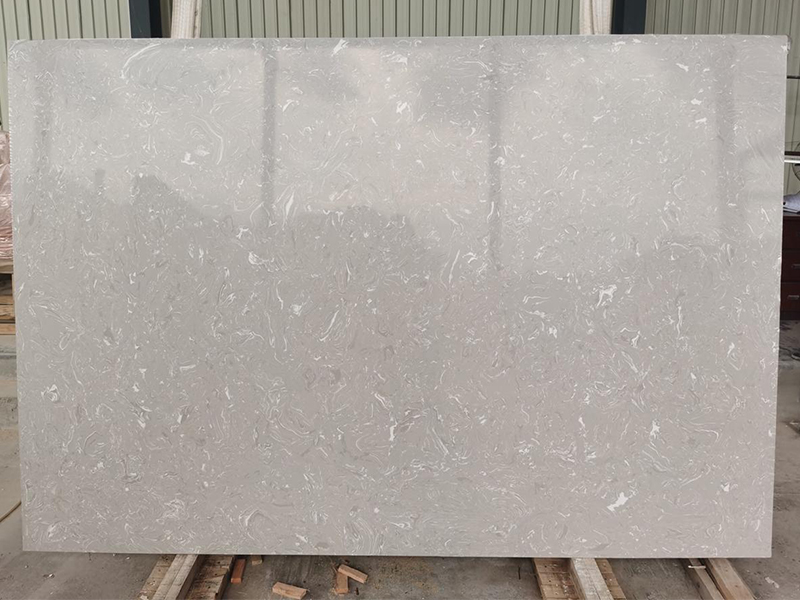
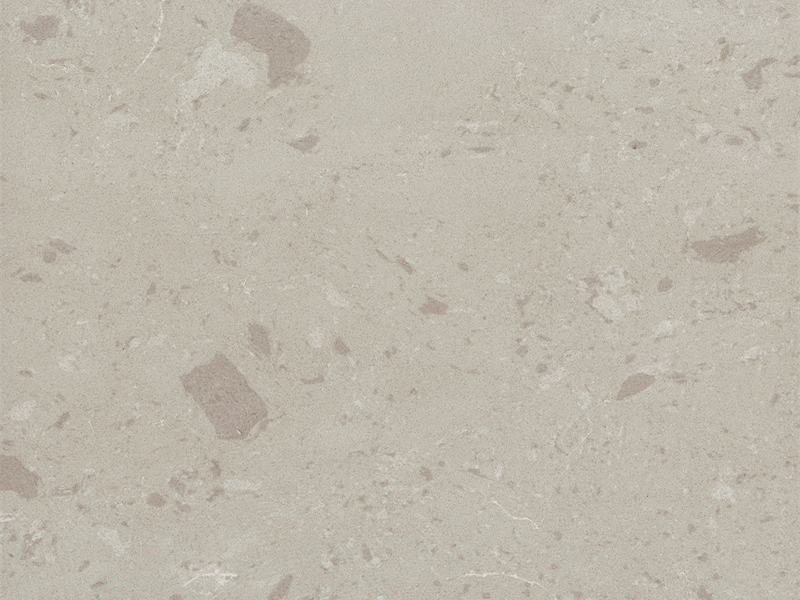
For Korea, Maya Grey and Milan Grey are the workhorse specifications; their neutral tone matches Korean interior preferences and their EN/ANSI-equivalent test datasets satisfy both the KC Mark and the buyer's internal spec. Grey-series consistency across production lots is the single attribute Korean QA teams weight most heavily.
ASEAN: 22.6% Growth and a Fragmented Standards Landscape
ASEAN grew 22.6% in 2025 to 3.05 billion RMB, the largest of the five markets by value and one of the fastest-growing, yet its standards landscape is the most fragmented — Indonesia requires SNI, Thailand requires TISI, Vietnam applies TCVN, and Malaysia runs on SIRIM, so a single product needs up to four national marks to serve the bloc. This fragmentation is the ASEAN trap: the demand is real and large, but suppliers who test only to one member state's standard cannot freely shift inventory across the region when one country's pipeline slows.
| ASEAN Member | National Standard | Typical Stone Demand | Sourcing Implication |
|---|---|---|---|
| Indonesia | SNI | Grey-series, quartz for malls/hotels | SNI-tested lots preferred |
| Thailand | TISI | White marble, large-format cladding | TISI mark speeds clearance |
| Vietnam | TCVN | Engineered quartz, commercial | Growing fastest within bloc |
| Malaysia | SIRIM | Grey marble, infrastructure | SIRIM for public projects |
Because ASEAN's 22.6% growth is broad-based across four standards regimes, the smart move is to commission grey-series testing against the two largest (SNI and TISI) and treat Vietnam and Malaysia as overflow — this covers roughly 80% of bloc demand with two test packages instead of four. ASTM and EN 14617 methods are broadly accepted as the underlying test basis, which lets a supplier map one dataset onto multiple national marks.
The Middle East: 83.8% Growth, Mega-Project Pull
The Middle East grew 83.8% in 2025 — the fastest of the five — propelled by Saudi Vision 2030 megaprojects and UAE Expo legacy construction, a spike we analyze in depth separately but rank here for portfolio context. Saudi Arabia alone surged 130% (1.3× its 2024 base) while the UAE added 74.2%. The entry barrier is SASO conformity via the Saber platform backed by SGS or equivalent third-party testing, with flexural thresholds of ≥ 8.0 MPa for flooring and ≥ 12.0 MPa for cladding. Victoria Grey and Aegean Grey are frequent Gulf specifications for commercial cladding because their consistent grey tone satisfies both the aesthetic and the EN 14617 dataset consultants require for a 10-year warranty.
Because the Gulf's 83.8% growth is contractor-concentrated around NEOM and a dozen mega-contractors, a supplier pre-qualified on one list compounds volume while an unqualified one is effectively locked out — concentration, not fragmentation, is the Gulf's defining risk.
The EU: 46.4% Growth Behind CE and EN 14617
The EU grew 46.4% in 2025 to 2.63 billion RMB, the second-fastest growth after the Gulf, driven by renovation-wave demand and a shift toward engineered surfaces that meet CE marking under the Construction Products Regulation. The CE mark requires declaration against harmonized standards, and for agglomerated and engineered stone the relevant family is EN 14617 (slabs) and EN 15285 (modular tiles). Unlike SASO, CE is largely supplier-declared with notified-body oversight, so the practical burden is maintaining a valid Declaration of Performance and the underlying EN test files rather than per-shipment port inspection.
Because EU buyers increasingly demand documented environmental performance (EN 15804 EPD and REACH compliance), a supplier serving the EU must carry both the mechanical EN 14617 dataset and a chemical-compliance file — the bar is broader than the Gulf's purely mechanical gate. Grey-series marble qualifies cleanly because its EN 14617 dataset is established and its pigment chemistry is stable and REACH-aligned. For buyers, the EU's 46.4% growth means more supplier capacity is now CE-ready, which improves lead times and price competition versus 2023.
The US: 2.88 Billion RMB, the Certification-Conscious Market
The US reached 2.88 billion RMB in 2025 with 12.3% growth, making it the second-largest market by value and the most certification-sensitive — a single failed ANSI A137.1 dimensional or NSF/ANSI 61 potable-water test can block an entire container at the border. US buyers specify to ASTM methods (C615 granite, C503 marble, C1028 slip) and to ANSI A137.1 for ceramic/agglomerated tile equivalency; surfaces contacting potable water must carry NSF/ANSI 61. The barrier is less about a port hold (the US has no mandatory pre-clearance like Saber) and more about the buyer's own QA rejecting non-conforming lots post-arrival.
Because US rejection risk lands after delivery rather than before, the cost of a failed test is a returned shipment and a burned relationship, not just a delayed one — so US-bound lines should be tested to the strictest ANSI threshold, not the minimum.
Because the US favors large-format quartz and grey/white marbles for residential and commercial countertops, the same grey-series and large-format products that serve the EU and Gulf also serve the US — which is why a unified grey-series + quartz program clears four of the five markets with overlapping test coverage. That overlap is the core of the cross-market sourcing strategy below.
Per-Market Material Selection Guide
The optimal 2026 product mix is a grey-series core (Maya Grey, Milan Grey, Victoria Grey, Aegean Grey) plus a Calacatta-type white and a Portoro-type black-gold accent, because this set carries EN 14617 / ANSI / ASTM datasets that map onto four of the five markets with minimal redundant testing. The table turns that into a per-market prescription.
| Market | Best-Fit Category | Why | Standard to Lead With |
|---|---|---|---|
| Korea | Grey-series marble (Maya, Milan) | Neutral tone, repeat-SKU retention | KC Mark + KCL test |
| ASEAN | Grey-series + quartz | Malls/hotels, broad bloc demand | SNI / TISI (EN 14617 basis) |
| Middle East | Calacatta white, grey-series, Portoro | Luxury + public realm, large-format | SASO + SGS (EN 14617) |
| EU | Grey-series, engineered quartz | Renovation wave, CE/REACH | CE + EN 14617 + EPD |
| US | Large-format quartz, grey/white marble | Countertops, ANSI/NSF | ANSI A137.1 + NSF/ANSI 61 |
Because four of the five markets accept the same grey-series EN 14617 dataset, a buyer who standardizes on grey-series marble as the cross-market core reduces total qualification cost by an estimated 35–50% compared with specifying a different hero stone per region. The Middle East's luxury tier is the only place where Calacatta white and Portoro black-gold earn a premium that justifies their separate test and book-matching overhead. For a tailored per-market shortlist with test-status mapping, reach our sourcing desk — we convert the five-market matrix into a qualified, certificate-ready supplier plan.
Frequently Asked Questions
Which is China's largest stone export market in 2026?
By 2025 value, Korea is the largest single market at 2.21 billion RMB, followed by the US at 2.88 billion RMB and ASEAN at 3.05 billion RMB. Korea leads on a per-country basis, but ASEAN is the largest regional bloc. Value and growth tell different stories: Korea is mature (9.8% growth) while the Middle East (83.8%) and EU (46.4%) are the growth leaders.
Why did the Middle East grow 83.8% while Korea grew only 9.8%?
The Middle East's spike is project-driven — Saudi Vision 2030 megaprojects (NEOM, Red Sea, Qiddiya) and UAE Expo legacy works — concentrated and state-backed. Korea's 9.8% reflects a saturated, spec-locked buyer base where wins come from repeat SKU re-orders, not market expansion. Different structure, different growth rate.
Do I need a different certificate for each of the five markets?
Essentially yes. Korea uses the KC Mark with KCL testing; ASEAN fragments across SNI, TISI, TCVN, and SIRIM; the Gulf requires SASO + SGS; the EU requires CE against EN 14617; the US requires ANSI A137.1 plus NSF/ANSI 61. The good news: most rest on ASTM/EN test methods, so one grey-series EN 14617 dataset maps onto four of the five, cutting redundant testing.
Which stone category works across the most markets?
Grey-series marble is the strongest cross-market fit — it serves Korea, ASEAN, the EU, and the US on the same EN 14617 dataset, and it is also accepted in the Gulf for commercial cladding. Large-format quartz is the second-best universal, especially for the EU and US. Calacatta white and Portoro black-gold earn premiums only in the Middle East luxury tier.
What is the certification risk in the US versus the Gulf?
The Gulf blocks non-conforming goods at port via SASO/Saber, so failure shows up before delivery. The US has no mandatory pre-clearance, so a failed ANSI or NSF test surfaces after arrival as a rejected lot and a damaged relationship. Both are costly; the US risk is post-delivery, the Gulf risk is pre-delivery.
How should I sequence my 2026 supplier qualification?
Qualify on the strictest overlapping standard first — build a grey-series EN 14617 dataset that serves the EU, US, ASEAN, and Gulf — then add SASO/SGS for the Gulf and NSF/ANSI 61 only for US potable-water lines. This sequence covers four of five markets with one core test package, reserving separate work for Korea's KC Mark and the US NSF line.
Is ASEAN worth the standards fragmentation?
Yes. At 3.05 billion RMB and 22.6% growth, ASEAN is the only market strong on both value and growth. Testing grey-series against SNI and TISI covers roughly 80% of bloc demand with two packages, and Vietnam/Malaysia can be treated as overflow. The fragmentation is real but manageable, and the growth justifies the paperwork.
If you want a certificate-ready, per-market supplier shortlist built on a unified grey-series core, our sourcing desk maps your 2026 volume onto the five markets with the minimum redundant testing.
Author: Mike Chen, Technical Director, Yinxiang Artificial Stone (15 years in stone manufacturing; LinkedIn-verifiable). Last verified: 2026-09-14. Market values and growth rates are based on 2025 Customs and trade-association tallies; absolute figures may vary by methodology. Access standards should be confirmed against each market's live regulatory requirements before contract execution.
 China's Five Stone Export Markets in 2026: Korea, ASEAN, the Middle East, the EU, and the US — Ranked
 How to Buy Artificial Stone From Global Suppliers?
 Why Is the Middle East Becoming China's Fastest-Growing Stone Market in 2026?
 What Is Artificial Translucent Stone and Where to Buy It?