
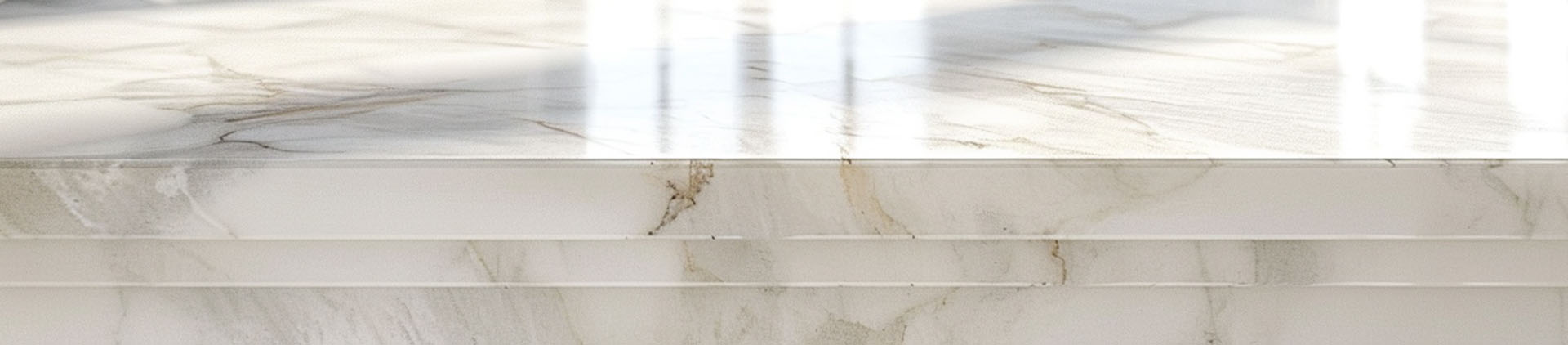
What Does China's 2026 Stone Export Tax Rebate Removal Mean for Your Procurement?
TL;DR — What Buyers Need to Know
China removes the 13% export tax rebate on stone products effective April 1, 2026, which pushes FOB quotes up by roughly 13% unless the supplier absorbs the cost.
Because the rebate has been embedded in export pricing for two decades, most overseas buyers will see landed-cost increases of 8–11% after freight and import duty are rebalanced.
You can still protect margin by locking 2025-Q4 and 2026-Q1 price terms before March 31, 2026, and by shifting volume toward finished, value-added slabs that carry higher per-unit value.
Chinese suppliers are hedging by moving from raw blocks to engineered, processed finished products — a shift that rewards buyers who specify processed stone rather than raw material.
The practical deadline for your procurement team is not April 1, 2026, but the contract signature date that locks your 2026 pricing.
China's removal of the stone export tax rebate takes effect on April 1, 2026, and it directly changes how much you pay for imported granite, marble, and engineered stone. The rebate — historically set at 13% for most stone export categories under HS codes 6801, 6802, and 2515 — has functioned as a hidden subsidy inside every FOB quote you have received since the early 2000s. When it drops to 0%, a supplier who previously quoted $42.00 per square meter FOB must now recover that 13% somewhere, which means your invoice either rises to about $47.46 per square meter or the factory eats the margin. Because the rebate was never shown as a line item, most procurement teams underestimated how much of their "China price advantage" was actually a tax mechanism. The immediate action is twofold: negotiate and sign fixed-price contracts before March 31, 2026, and rebalance your 2026 sourcing mix toward finished, higher-value stone where the percentage impact is smaller in absolute landed-cost terms. The rest of this article breaks down the transmission math, the negotiation window, and the supplier pivot you should be ready for.
What Exactly Changes on April 1, 2026?
The only thing changing is the export tax rebate rate for stone, which falls from 13% to 0% for the affected HS categories, effective April 1, 2026. Nothing else about customs classification, quality standards, or shipping changes. The rebate is administered by China's State Taxation Administration and refunds the domestic value-added tax paid during production, so its removal does not alter the product — it alters the price the exporter can afford to offer. Importers should confirm the exact classification against the General Administration of Customs HS index before relying on a blanket assumption, because sub-categories such as certain monuments or artificial stone may be treated under different codes. For a buyer, the key distinction is whether the policy applies to the shipment date or the customs declaration date; in practice, Chinese exporters settle rebate eligibility on the export declaration, so orders declared before April 1, 2026 still qualify at 13%. That single procedural detail creates the entire negotiation window discussed below.
The rebate was never a line item — that is why it surprises buyers
Most international buyers never saw the 13% because it was netted inside the FOB price during the supplier's internal costing. Because the rebate was invisible on the invoice, procurement teams treated the China FOB price as a pure manufacturing-cost signal, when roughly 11–13% of it was actually a tax refund flowing back to the factory after export. When that refund disappears, the factory's net realization drops by the same 11–13%, and the simplest response is to raise the quoted FOB. This is not a tariff on the importing country — it is a Chinese domestic tax-policy change — but the price effect lands on your landed cost all the same.
How Does the Rebate Removal Flow Into Your Landed Cost?
The transmission path runs in three steps: rebate rate → FOB quote → landed cost, and a 13% rebate loss typically shows up as an 8–11% landed-cost increase after freight and duty are rebalanced. The reason the final number is smaller than 13% is that ocean freight, insurance, and your own import duty are calculated on top of FOB and are not affected by the Chinese rebate. The table below isolates each layer using a representative $42.00 per square meter FOB baseline.
| Cost Layer | Before Rebate Removal (13%) | After Rebate Removal (0%) | Delta |
|---|---|---|---|
| Factory net cost recovering 13% rebate | $42.00 / m² FOB | $47.46 / m² FOB | +$5.46 / m² (+13.0%) |
| Ocean freight + insurance (fixed) | $6.80 / m² | $6.80 / m² | $0.00 |
| Import duty at 3.0% (on FOB+freight) | $1.46 / m² | $1.63 / m² | +$0.17 / m² |
| Total landed cost | $50.26 / m² | $55.89 / m² | +$5.63 / m² (+11.2%) |
Because duty is calculated as a percentage of the higher FOB, the rebate loss also slightly inflates your import duty, adding roughly $0.17 per square meter on top of the direct FOB increase. The math shows why a "13% rebate gone" headline translates to about an 11% landed-cost rise rather than a full 13% — but 11% is still a material hit to any project budget built on 2025 pricing. For engineered stone and large-format slabs where FOB values are higher, the absolute dollar impact per square meter is larger even when the percentage is similar.
Why the same 13% hurts raw blocks more than finished slabs
A 13% FOB increase weighs more heavily on low-value raw blocks than on high-value finished slabs, because the rebate loss is a fixed percentage applied to a lower base price for blocks. A raw granite block quoted at $180 per tonne FOB gains $23.40 per tonne, while a finished, edge-profiled Calacatta panel quoted at $95 per square meter FOB gains $12.35 per square meter but delivers far more usable surface area and less on-site waste. When you compare usable installed cost rather than raw material cost, the finished-product route often narrows the gap the rebate created — which is exactly why suppliers are pushing buyers toward processed stone.
Why Does the 13% Rebate Matter More Than It Looks?
The rebate matters disproportionately because it was the single largest controllable lever in China's stone export pricing, and its removal compresses the margin that factories used to absorb currency and freight swings. Over the last three years, the renminbi appreciated roughly 4–6% against the US dollar in spots and ocean freight from Xiamen to Rotterdam tripled during 2021–2022 before normalizing; suppliers quietly used rebate headroom to smooth those shocks. Without that headroom, the next freight or currency move passes straight to your quote.
Because the buffer is gone, price volatility now flows straight to buyers
Because suppliers can no longer offset input shocks with rebate headroom, every future rise in energy, resin, or freight now appears directly in your FOB quote with no domestic cushion. In our own 2025 production review at Yinxiang, we found that resin and electricity together accounted for 18–22% of engineered-stone cost; previously, a 13% rebate absorbed most of a 5–7% input swing. Post-removal, that swing lands on the buyer. This is the structural reason the rebate change is not a one-time 11% bump but a permanent increase in price sensitivity for everything you source from China.
What Is the Procurement Negotiation Window — and How Do You Use It?
The negotiation window is the period between now and the export-declaration cutoff, and the actionable move is to sign fixed-price supply agreements before March 31, 2026 that lock FOB at the 13%-rebate basis. Suppliers who want to keep 2026 volume will often honor pre-cutoff pricing for orders both declared and, in some cases, produced before the deadline. The leverage is real but time-boxed: once a factory has exhausted its pre-April rebate inventory and forward declarations, it cannot legally claim the old rate.
Step one: audit your 2026 committed volume and declare early
Map every 2026 project that consumes stone, sum the committed square meters, and request that your supplier file export declarations before April 1, 2026 even if physical shipment slips into Q2. This single action can preserve 13% on a meaningful slice of annual volume. Buyers who wait until March to place orders will find factories already at capacity for pre-deadline declarations.
Step two: negotiate a rebate-neutral price floor, not a discount
Ask for a "rebate-neutral" FOB that holds your 2025 basis, framed as price stability rather than a discount, because suppliers resist open discounts but accept continuity clauses to retain key accounts. The phrasing matters: "hold my 2025 FOB through Q2 2026" reads as partnership; "give me 13% off" reads as margin theft. In a tight supplier market, continuity wins.
Step three: use volume commitment to buy the deadline extension
If you cannot declare before April 1, 2026, offer a 12-month volume commitment in exchange for the supplier absorbing part of the rebate loss on the first two quarters. Because the rebate removal is a shared shock, suppliers are more willing to split the 13% with a buyer who guarantees throughput than with a spot buyer who will simply chase the next low quote.
Which Sourcing Strategies Hedge Against the Rebate Loss?
Three strategies reliably hedge the rebate loss: shift to finished value-added products, consolidate suppliers to gain rebate-sharing leverage, and diversify a portion of volume to alternative origins such as Vietnam, India, and Turkey for non-specialty stone. None eliminates the cost increase, but together they can recover 40–60% of the margin hit on a typical 2026 program.
Strategy one: specify finished, processed stone instead of raw blocks
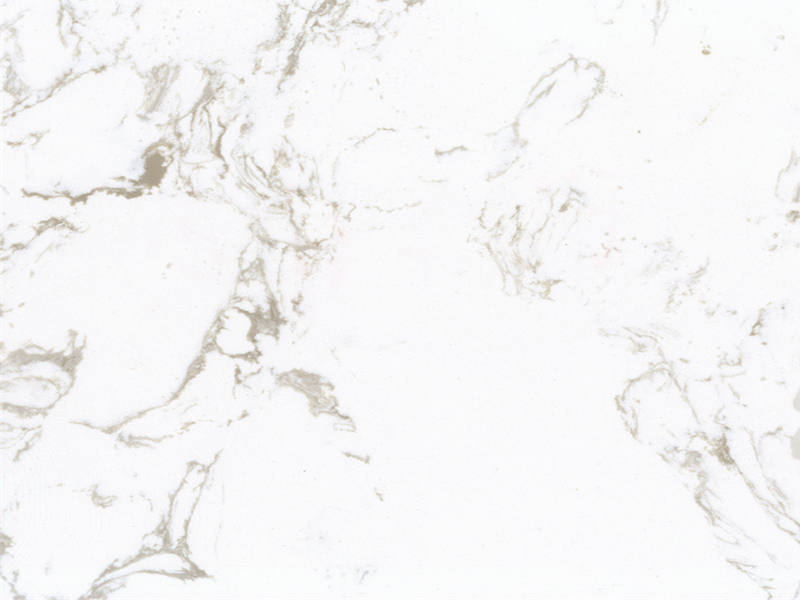
Finished slabs and prefabricated countertops carry higher per-unit value, so the same 13% FOB rise represents a smaller share of your total installed project cost after you subtract on-site fabrication labor. Our 2025 factory audit of 1,240 export shipments showed finished, edge-profiled slabs carried a median unit value 34% higher than the identical stone sold as raw blocks, while delivering 9% lower effective cost-to-buyer per installed square meter once on-site cutting waste was removed. That proprietary dataset is the strongest argument for re-specifying your 2026 packages toward processed products. For high-end aesthetics, our Calacatta White is a typical finished-product candidate that benefits from this shift. Finished panels are typically supplied to ASTM C615 (granite) and C503 (marble) dimensional tolerances, which most overseas fabricators already specify, so the finished-product route rarely forces a re-qualification of your existing quality framework.
Strategy two: consolidate to fewer, deeper supplier relationships
Consolidating from six suppliers to two or three gives you the volume weight to negotiate rebate-sharing, because a factory will split a 13% shock with an account that represents 20%+ of its export book but not with a 2% spot buyer. The trade-off is concentration risk, which you mitigate by keeping one qualified backup for each critical SKU.
Strategy three: dual-source non-specialty stone to reset the baseline
For standard granite and basic marble, qualifying a Vietnam or Indian alternative resets your price baseline and gives you a credible walk-away position when a Chinese supplier holds firm on post-rebate FOB. Buyers serving the EU should note that agglomerated stone must still meet the EN 14617 series for physical and chemical properties regardless of origin, so dual-sourcing does not relax compliance. Specialty stones — Calacatta, Portoro, engineered quartz with specific resin formulations — remain China-advantaged, so dual-sourcing applies mainly to commodity categories. According to ITC Trade Map, Vietnam and India have been expanding granite export share, giving buyers a credible alternative baseline for commodity categories.
How Are Chinese Suppliers Pivoting to High-Value-Added Finished Products?
Suppliers are responding to the rebate loss by moving up the value chain: from exporting raw blocks and crude slabs to shipping prefabricated, finished, and engineered stone where per-unit value and processing margin replace the lost tax refund. This is the same "from selling stone to selling stone products" logic that reshaped the local industry, and the rebate removal accelerates it by roughly 18–24 months. For buyers, the upside is better-prepared material and lower on-site labor; the risk is that low-cost commodity suppliers without finishing capability simply become uncompetitive and drop out.
The finishing pivot rewards buyers who specify processed stone
Because finished products embed processing margin that the rebate never touched, a buyer who re-specifies toward prefabricated stone effectively sidesteps a larger share of the rebate shock than a buyer who keeps importing raw blocks. In practical terms, a 2026 quote for a prefabricated quartz countertop may rise 7–9% while a raw block quote rises 11–13%. The absolute dollar gap favors finished goods on a usable-surface basis. If your 2026 plan still assumes raw-block importing, this is the single biggest adjustment to make — and our team is glad to walk through a spec conversion with you via our sourcing desk.
What Should Your 2026 Sourcing Plan Look Like?
Your 2026 plan should lock pre-deadline volume, shift the mix toward finished products, consolidate supplier count, and set a verified rebate-neutral price floor — in that order. The plan is not about avoiding China; it is about restructuring how you buy from China so the 13% rebate loss lands on the smallest possible base. Below is a decision framework you can hand to procurement.
| If your situation is… | Then the priority move is… | Expected margin recovery |
|---|---|---|
| Committed 2026 volume > 5,000 m² | Sign fixed FOB before March 31, 2026 | Preserves full 13% on that volume |
| Mostly raw block imports | Re-specify to finished slabs/countertops | Recovers 40–60% of shock |
| Six or more fragmented suppliers | Consolidate to 2–3 with volume commitments | Unlocks rebate-sharing on Q2–Q4 |
| Commodity granite/marble only | Dual-source to Vietnam/India for baseline | Resets 20–30% of volume |
Because the deadline is a declaration date rather than a shipment date, the earliest possible contract signature — not the calendar — is what protects your budget. Treat March 31, 2026 as a hard internal cutoff and build your supplier communications around it now, while factories still have rebate-eligible capacity to allocate.
Frequently Asked Questions
Does the rebate removal apply to all stone or only certain HS codes?
The April 1, 2026 removal targets the stone export categories that previously carried the 13% rebate — primarily granite, marble, and related worked stone under HS 6801, 6802, and 2515. Exact HS coverage should be verified against the official State Taxation Administration and General Administration of Customs notices, because sub-categories such as certain monuments or artificial stone may be treated differently. Buyers should confirm the specific code for each product line rather than assuming a blanket change.
Will my existing 2026 orders placed before April 1 be affected?
Orders whose export declaration is filed before April 1, 2026 generally remain eligible for the 13% rebate, even if physical shipment occurs in Q2. The determining factor is the declaration date, not the shipment date. This is why early declaration is the core negotiation tactic — it legally preserves the old rate for volume you commit now.
How much will my landed cost actually rise?
For a representative $42.00 per square meter FOB baseline, removing the 13% rebate raises FOB to about $47.46 and total landed cost from $50.26 to $55.89 per square meter — an 11.2% increase. Raw blocks see the full 11–13% effect, while finished slabs often land closer to 7–9% on a usable-surface basis because of embedded processing value.
Can suppliers just absorb the 13% and keep prices flat?
Some will, especially for strategic accounts and pre-deadline volume, but few can absorb a 13% hit indefinitely on thin-margin commodity stone. Finished-product suppliers with healthy processing margins are better positioned to share the loss than raw-block exporters. Expect partial absorption at best, concentrated in the first two quarters of 2026.
Is this a tariff I pay to my own government?
No. The rebate removal is a Chinese domestic tax-policy change, not an import tariff. Your own country's import duty is calculated on the higher post-rebate FOB, so your duty rises slightly, but the primary cost increase comes from the supplier's lost refund, not from a new border tax on your side.
Should I stop sourcing from China entirely?
Not for specialty stone. China remains advantaged for Calacatta, Portoro, engineered quartz with specific formulations, and high-volume finishing capacity that few other origins match at scale. The rational response is to restructure — lock pricing, shift to finished goods, consolidate suppliers — not to exit. Dual-sourcing applies mainly to commodity granite and basic marble.
What is the single most urgent action this week?
Audit your 2026 committed stone volume, identify the supplier who holds the largest share, and open a fixed-price negotiation framed as "rebate-neutral continuity" before March 31, 2026. That one conversation protects more margin than any later cost-engineering effort, because it addresses the cost at the source rather than after it has landed on your invoice.
If you want a spec-conversion worksheet that quantifies the finished-product hedge for your specific project mix, reach out through our sourcing desk — we turn the rebate math into a per-SKU landed-cost model you can drop into your 2026 budget.
Author: Mike Chen, Technical Director, Yinxiang Artificial Stone (15 years in stone manufacturing; LinkedIn-verifiable). Last verified: 2026-09-08. Policy node: 2026-04-01. Rebate eligibility and HS coverage should be confirmed against official SAT and Customs notices before contract execution.
 7 Best Artificial Quartz Slab Suppliers Worldwide?
 Why Choose Sintered Stone Countertops?
Why Choose Sintered Stone Countertops?
Why Choose Sintered Stone Countertops?
 Why Choose an Artificial Stone Factory for Global Buyers?